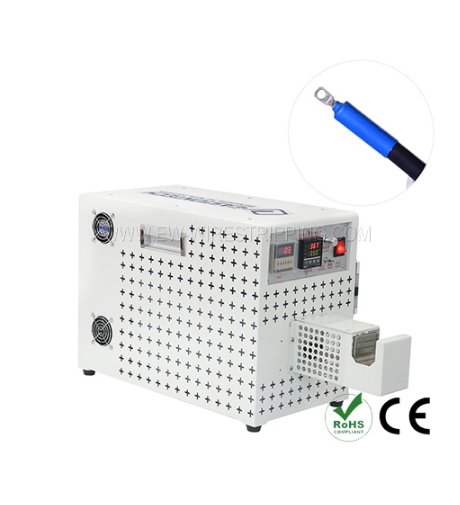
Heat shrinking machine
Fast, clean, and consistent sleeve shrinking is essential in many cable assembly, wire harness, electronics, and light industrial production lines. When the process needs better repeatability than a hand-held heat tool can typically provide, a heat shrinking machine helps improve throughput, control heating more evenly, and reduce variation from operator to operator.
On this category page, buyers can explore equipment designed for controlled heat shrinking applications where efficiency and stable process results matter. Whether you are setting up a new workstation or upgrading an existing line, the right machine depends on tubing size, heating length, temperature control, output expectations, and how the equipment fits into the wider production environment.

Where heat shrinking machines are typically used
Heat shrinking equipment is commonly used to apply heat to shrink tubing around wires, terminals, joints, connectors, and other components that require insulation, bundling, strain relief, or surface protection. In practical terms, this makes the equipment relevant for cable processing shops, electrical assembly, electronics production, automotive subassembly, and similar manufacturing environments.
Compared with manual heating methods, a dedicated machine can support more uniform heating across repeated cycles. That is especially useful when production teams need a more controlled process for medium-volume work, or when product quality depends on avoiding under-heating, overheating, or inconsistent sleeve finish.
What to look for when choosing a machine
The most important selection factors usually start with the physical dimensions of the workpiece. Buyers should consider the tubing or component diameter range, the required heating length, and the shape of the heated area. These points directly affect whether a machine will suit individual wires, cable bundles, or more specific assembly tasks.
It is also worth evaluating temperature adjustability, air delivery, and expected output per hour. In a production setting, these factors influence both product quality and line efficiency. If the process involves continuous work over longer shifts, power rating, operator convenience, and machine footprint may also play a role in equipment selection.
For operations comparing different process options, it can also be useful to review the broader heat shrinking machine range alongside adjacent equipment used in finishing or utilities support.
Example equipment in this category
A representative model in this category is the EASTONTECH EW-1935 electric heat shrinking machine. Based on the available product data, this machine is designed for heat shrinking work across a defined diameter and heating length range, with adjustable temperature and air volume to support process tuning for different materials and applications.
Its listed productivity range makes it relevant for workshops and production cells that need better consistency than purely manual tools, while still keeping the process compact and manageable. The machine’s L-shape or Y-shape air outlet options also suggest flexibility in how heated airflow can be directed depending on the workpiece and workstation layout.
Users looking for equipment from this manufacturer can also view the EASTONTECH product lineup for related machinery and processing solutions.
How process control affects shrink quality
Good shrink results depend on more than simply applying heat. Operators need enough energy to fully shrink the tubing, but not so much that the material scorches, deforms unevenly, or affects nearby components. That is why stable heat delivery and adjustable settings are important in repetitive industrial use.
Airflow pattern and temperature range can influence how evenly the tubing shrinks around the target area. In production environments where multiple sleeve sizes or cable assemblies are handled each day, adjustable machine settings help reduce setup issues and make changeovers easier. This is particularly valuable when appearance, insulation coverage, and repeatability are all part of the quality requirement.
Fit within a broader production setup
Heat shrinking is often only one step in a larger manufacturing sequence. Depending on the application, upstream and downstream processes may include cable preparation, assembly, inspection, packaging, or thermal management around the workstation. Thinking about the machine as part of the overall process usually leads to a better purchasing decision than evaluating heating performance alone.
For example, some facilities may also need support equipment for air quality or pneumatic utilities, in which case compressed air treatment equipment may be relevant to the wider setup. In other environments where thermal control is important for adjacent processes or machinery, an industrial water cooler or chiller may also be part of the broader production infrastructure.
Why consistency matters in cable and sleeve processing
In many industrial applications, shrink tubing is not only cosmetic. It can contribute to insulation, mechanical protection, organization of cable bundles, and improved handling of finished assemblies. A more repeatable machine-based process helps reduce rework and supports a cleaner finished product, especially when output volume increases.
Consistency also matters for traceability and standard work. When production teams use defined settings for a given sleeve type and assembly format, it becomes easier to train operators, standardize quality checks, and maintain stable output over time. This is often one of the practical reasons buyers move from basic manual heating methods to a dedicated industrial heat shrinking solution.
Choosing the right category for your application
Not every heating application requires the same type of equipment. Some buyers need a compact machine for bench use, while others may prioritize throughput, adjustable airflow, or compatibility with a wider range of tubing sizes. Reviewing the actual workpiece dimensions, cycle expectations, and operating environment is the best starting point before shortlisting models.
This category is intended to help procurement teams, engineers, and production users compare suitable options for controlled sleeve shrinking tasks. If your process involves cable insulation, wire harness finishing, or similar heat-applied tubing work, a dedicated machine can offer a more structured and repeatable approach than general-purpose heating tools.
When evaluating available options, focus on the relationship between part size, heating length, temperature control, productivity, and how the machine integrates into your line. That approach will make it easier to identify a heat shrinking machine that fits the real demands of your process rather than simply matching a headline specification.
-
-
-
-
-
-
-
-
-
-
-
-
-
-
-
-
-
-
-
-

-
-
-
-