


Chair Style Speaker
In control rooms, screening environments, training facilities, and specialized video monitoring spaces, audio needs to be clear without taking over the room. That is where Chair Style Speaker solutions become practical. Instead of relying only on wall-mounted or large free-standing speakers, this category supports more localized sound delivery for operator seating, review stations, and compact AV setups where space, clarity, and listening position all matter.
For B2B buyers, the value of this type of speaker is usually less about appearance alone and more about how it fits into a broader audio chain. In many professional environments, chair-integrated or chair-positioned speaker systems are used to improve audibility at the user position, reduce unnecessary sound spill, and support more focused monitoring in multi-seat or task-oriented installations.
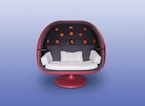
Where chair style speakers fit in professional AV environments
Unlike general-purpose room speakers, chair style speakers are typically considered as part of a position-specific audio setup. They can be relevant in facilities where individual users need to hear prompts, reference audio, program sound, or monitoring output without raising overall room volume. This makes them suitable for technical rooms, operator stations, media review spaces, and selected public or semi-public installations.
In video-related applications, audio is often only one part of a larger workflow that may include monitoring, signal conversion, decoding, and amplification. A chair style speaker can therefore be selected not as a standalone item, but as a supporting component in an integrated system where listening quality at the seat is a functional requirement.
Key considerations when selecting a chair style speaker
One of the first points to evaluate is the intended listening distance and user position. Because this category is closely tied to seated listening, the installation layout matters more than it would for a conventional room-wide speaker. Buyers should consider how the speaker is mounted or integrated, how close the listener will be, and whether the objective is speech intelligibility, cue monitoring, or general program audio.
Connection method is also important. In professional systems, chair style speakers may operate alongside upstream components such as an audio amplifier for video systems, so matching signal path and power requirements is essential. It is also worth checking how the speaker will coexist with existing furniture, operator consoles, and cable management constraints.
Benefits in multi-seat and operator-focused installations
In environments with several users working side by side, localized audio can help reduce overlap between listening zones. That can support better concentration, especially where multiple monitoring tasks happen at the same time. A chair style speaker may therefore be a useful option when room-wide playback would create distraction or make it harder for users to focus on their own source.
Another practical advantage is better use of available space. Large cabinets or broad-coverage speaker systems are not always ideal in compact technical rooms. A more targeted speaker arrangement can make the installation cleaner and easier to integrate into existing seating or workstation layouts while still delivering the required sound to the listener.
How this category works with other video audio equipment
Most professional buyers will evaluate chair style speakers as one part of a signal chain rather than in isolation. Depending on the system design, source signals may come from playback, monitoring, or decoded program feeds. In that context, related equipment such as a video decoder may sit upstream, while amplification and monitoring tools support control and verification of the audio path.
For applications where operators need to compare or supervise sound as part of a video workflow, pairing localized playback with dedicated audio monitoring equipment can make the overall setup easier to manage. This is especially relevant when audio must be checked at a workstation without turning the entire room into a high-volume listening environment.
Installation and integration points to review
Before purchasing, it is useful to confirm the physical and operational context of the deployment. Chair style speaker projects often involve practical questions such as seat compatibility, placement constraints, wiring route, maintenance access, and how the unit will be cleaned or serviced over time. These details can have a direct impact on long-term usability in commercial or institutional settings.
It is also sensible to review how the speaker will interact with the rest of the room acoustically. Even a localized speaker can be affected by reflective surfaces, nearby equipment, and seating geometry. For that reason, installation planning should take into account both the listening experience at the seat and the wider environment around it.
Typical purchasing priorities for B2B buyers
Procurement teams and technical integrators usually look beyond the product label and focus on deployment requirements. In this category, common priorities include integration simplicity, suitability for the intended chair or seating arrangement, compatibility with existing AV infrastructure, and the ability to support reliable daily operation. These factors tend to matter more than generic consumer-style audio claims.
For project-based buying, consistency across multiple seats or rooms may also be important. Standardizing on the right speaker format can simplify installation, replacement planning, and user experience across a site. If the wider system also includes other supporting devices such as an audio amplifier, coordinated selection can reduce integration risk.
Choosing the right chair style speaker for your application
The best choice depends on how audio is actually used at the seat. A training room, a technical review station, and a control-oriented workstation may all need different priorities in terms of volume control, clarity, mounting approach, and system integration. Looking at the complete workflow usually leads to better results than choosing based on form factor alone.
As part of a professional AV ecosystem, chair style speakers can play a useful role in delivering localized audio where comfort, focus, and operational clarity are important. If you are building or upgrading a video-related audio setup, this category is worth evaluating alongside the surrounding signal, monitoring, and amplification equipment so the final system works as one coherent solution.
-
-
-
-
-
-
-
-
-
-
-
-
-
-
-
-
-
-
-
-
-
-
-
-