


Machine for checking bottles, packages, medicine pipes
Quality control for bottles, flexible packaging, and medical tubing often depends on one basic requirement: knowing whether wall thickness and material distribution stay within tolerance. Small deviations can affect strength, sealing performance, squeeze behavior, product safety, and consistency in downstream processing. For manufacturers and testing labs, this makes machine for checking bottles, packages, medicine pipes an important category within routine inspection and product validation.
On this page, the focus is on equipment used to evaluate thickness-related characteristics on formed parts and packaged components where direct access is limited or where non-destructive measurement is preferred. These systems are commonly used in packaging production, medical device manufacturing, incoming quality inspection, and failure analysis when teams need repeatable data without cutting the sample apart.
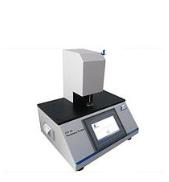
Where this category is typically used
Thickness checking is relevant in many production environments, especially where plastic containers, blister-style packaging, pouches, tubes, and medical pipes must meet dimensional and functional requirements. A bottle with uneven wall distribution may create weak points during filling or transport, while tubing with inconsistent thickness can affect flexibility, burst resistance, or fit in an assembly.
In pharmaceutical and healthcare applications, inspection is often tied to product reliability and process control. For medicine pipes and similar tubular components, measurement helps verify that extrusion or forming processes remain stable. In packaging applications, it supports checks on formed cavities, sealed areas, and molded features where wall variation may not be obvious by visual inspection alone.
Why thickness measurement matters in bottles, packages, and medical pipes
The goal is not only to confirm a nominal dimension, but also to understand material distribution across the part. This is particularly useful for blow-molded bottles, formed plastic packaging, and thin-wall medical components where localized thinning can occur during manufacturing. Detecting these variations early can reduce scrap, support root-cause analysis, and improve confidence in product performance.
For B2B buyers, the selection criteria usually go beyond a single reading. Teams often need a practical combination of measurement range, probe accessibility, portability, data storage, repeatability, and compatibility with shop-floor or laboratory workflows. In that context, choosing the right inspection approach can help standardize quality checks across multiple product formats.
Common inspection needs across this category
Equipment in this category is generally chosen to address specific sample geometries and inspection constraints. Bottles may require measurements through curved surfaces, packaging components may need access to recessed areas, and medical tubing may call for fine resolution on thin sections. The right system depends on whether the user is checking incoming samples, performing in-process audits, or documenting final quality results.
Many users also look for features that support day-to-day operation, such as portable use near the line, alarm functions for limit checking, and onboard data handling for traceability. When the testing scope extends to broader package performance, related methods such as water vapor transmission rate testing or oxygen permeation analysis may also be relevant, especially for barrier packaging evaluation.
Example equipment for non-destructive thickness checking
A representative product in this category is the Olympus Magna-Mike 8600 thickness gauge, which is designed for non-destructive thickness measurement on nonferrous materials. It is well suited to applications where users need to inspect bottles, containers, packaging parts, or tubing without sectioning the sample. The system supports fine measurement resolution and can be used with different probe styles to improve access to various shapes and test points.
This type of instrument is especially useful when the part geometry makes conventional measurement difficult. Portable construction, onboard storage, and multiple interface options can support both laboratory verification and production-floor quality routines. For users managing frequent sample changes or field inspections, a robust handheld platform can be a practical advantage.
How to choose the right machine for your application
The first step is to define the sample type clearly: rigid bottle, flexible package, formed tray, medical pipe, or another hollow or thin-wall component. From there, buyers should consider the expected thickness range, access limitations, required resolution, and whether the test must be non-destructive. Probe style and measurement method are important when surfaces are curved, recessed, or difficult to reach directly.
It is also worth considering workflow requirements such as portability, operator training level, and the need to save or export results. If the equipment will be used as part of a wider material and package evaluation process, adjacent categories such as gas cylinder test and maintenance equipment or furnaces for material conditioning and thermal testing may support broader quality and durability studies depending on the product type.
What buyers typically look for in B2B procurement
Industrial buyers usually compare equipment based on repeatability, ease of use, serviceability, and suitability for the actual part geometries they handle every day. In regulated or documentation-heavy environments, data capture and traceability can be just as important as the measurement itself. A system that fits the inspection procedure well can help reduce operator variation and improve consistency across shifts or sites.
Another practical factor is how easily the instrument fits into an existing quality process. Some teams need a portable solution for spot checks, while others require a bench-supported workflow for controlled lab inspection. The best choice depends on whether the priority is rapid screening, detailed validation, or a balance between both.
Supporting consistent quality control
Inspection equipment for bottles, packages, and medicine pipes plays a direct role in reducing uncertainty during product development and production. By verifying wall thickness and identifying areas of uneven material distribution, manufacturers can make better decisions about tooling, processing conditions, incoming material quality, and final acceptance criteria.
If you are selecting a solution in this category, it helps to start with the real inspection task: sample shape, measurement access, target tolerance, and reporting needs. With the right setup, thickness inspection becomes more than a pass/fail step—it becomes a reliable source of process insight for packaging and medical component quality control.
-
-
-
-
-
-
-
-
-
-
-
-
-
-
-
-
-
-
-
-
-
-
-
-