


Heat Deflection Tester
When plastic parts, molded components, or engineering materials must keep their shape under load at elevated temperature, reliable thermal deformation testing becomes essential. In quality control laboratories, R&D centers, and materials evaluation workflows, a Heat Deflection Tester helps teams compare material behavior in a controlled and repeatable way before products move into production or application testing.
This category brings together instruments used for heat deflection and related Vicat softening evaluations, with solutions suited to different throughput needs and test setups. It is especially relevant for users working with thermoplastics, polymer compounds, and other materials where dimensional stability under heat is a key performance criterion.
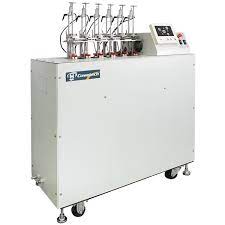
Why heat deflection testing matters in material evaluation
Heat deflection testing is commonly used to assess how a specimen responds when temperature rises under a specified load. In practical terms, it gives laboratories a structured way to compare materials that may appear similar at room temperature but behave very differently in thermal environments.
This type of testing is valuable in product development, incoming material inspection, and validation of production consistency. It is often considered alongside other laboratory methods such as water vapor transmission rate testing or oxygen permeation analysis when thermal, mechanical, and barrier properties all influence final product performance.
Typical applications for Heat Deflection Tester systems
These instruments are widely used in plastics and polymer laboratories to evaluate materials for housings, electrical components, packaging, automotive parts, and industrial components exposed to elevated temperature. The goal is not only to obtain a test value, but also to support smarter material selection during design and qualification.
In many facilities, a Heat Deflection Tester is part of a broader testing environment that may also include controlled heating equipment such as laboratory furnaces for sample preparation or thermal treatment. This makes the category relevant for teams building a complete materials testing workflow rather than purchasing a single standalone instrument.
Common configurations in this category
The products shown in this category cover both standard HDT testing and Vicat-related evaluation. Depending on workflow requirements, users may choose between compact systems for routine testing and higher-capacity platforms designed for multiple specimens in one cycle.
For example, Cometech offers several configurations within this category, including the QC-657 for 1 station, QC-657A for 2 stations, and QC-657B for 3 stations. For labs that need higher throughput, the QC-656A Digital H.D.T. Heat Deflection Tester and the QC-661 Digital Vicat Heat Deflection Tester provide 6-station capability, while the QC-662B supports Vicat heat deflection testing in flexible station arrangements.
How to choose the right tester for your lab
The most suitable system usually depends on test method, sample volume, and reporting needs. A single-station model can be practical for lower testing frequency, early-stage material screening, or laboratories with limited bench space. Multi-station systems are often preferred when standardization, comparative testing, or higher daily throughput are important.
It is also useful to review the heating profile, temperature range, deflection measurement capability, and cooling arrangement required by your procedure. In this category, several Cometech models support testing up to 300℃ and include digital interfaces that help operators manage test data more efficiently. If your laboratory also works across broader material verification programs, it may be worth comparing complementary solutions from Cometech for related mechanical and thermal testing tasks.
Featured equipment in this category
A number of representative models help illustrate the scope of the category. The Cometech QC-657A H.D.T. Heat Deflection Tester is designed for 2-station testing, while the QC-657B extends this to 3 stations for labs that need more comparative capacity in the same run. The QC-656A Digital H.D.T. Heat Deflection Tester is aimed at higher-volume workflows with 6 test stations and a digital test environment.
For Vicat-oriented applications, the Cometech QC-662B Vicat Heat Deflection Tester and QC-661 Digital Vicat Heat Deflection Tester support laboratories that need to evaluate softening behavior and thermal response under controlled conditions. Although this page focuses on heat deflection equipment, the broader product ecosystem may also include specialized instruments from manufacturers such as Wöhler for other measurement and testing tasks in industrial service and inspection environments.
What to look for in day-to-day operation
Beyond headline specifications, usability has a direct impact on test consistency. Laboratories often benefit from systems with clear touch-screen interfaces, guided operating steps, stable temperature control, and straightforward specimen setup. These features help reduce operator variability and make routine testing easier to manage.
Data handling and repeatability are equally important. Instruments that record test values clearly and support graphing or export workflows can simplify traceability, internal reporting, and comparison between material batches. For quality teams, this can be just as valuable as the raw thermal result itself.
Supporting better material decisions
A well-matched Heat Deflection Tester supports more than compliance testing. It helps engineering, purchasing, and quality teams make better decisions about material substitution, supplier comparison, and product suitability for real operating conditions. That is especially important in B2B environments where repeatability and documentation matter as much as the test outcome.
If you are selecting equipment for plastics or material performance testing, this category provides options ranging from entry-level single-station setups to higher-throughput digital systems. Reviewing station count, test type, and workflow requirements will usually narrow the choice quickly and lead to a more effective laboratory investment.
-
-
-
-
-
-
-
-
-
-
-
-
-
-
-
-
-
-
-
-
-
-
-
-