


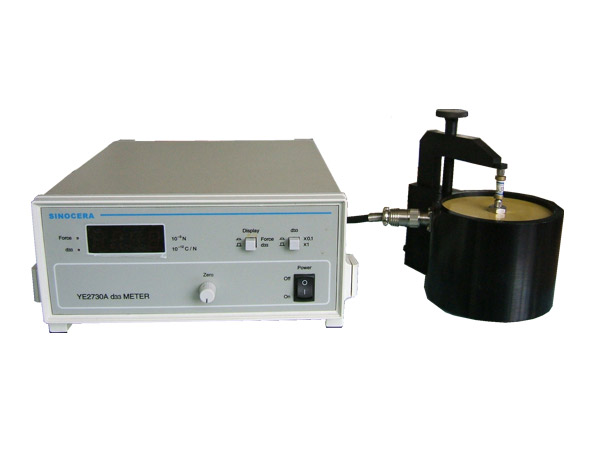
D33 Test Meter of piezoelectric ceramics, polymers, and single crystals
When evaluating piezoelectric materials, one of the first questions is how efficiently a sample converts mechanical force into electrical charge. That is where a D33 test meter becomes especially useful. For laboratories, materials developers, and industrial quality teams working with piezoelectric ceramics, polymers, and single crystals, this type of instrument helps verify whether a material is suitable for sensing, actuation, and precision component production.
On this page, the focus is on instruments used to measure the piezoelectric charge constant under controlled conditions. In practice, these meters support incoming inspection, formulation comparison, R&D validation, and routine production checks where repeatable material characterization matters.
Why D33 measurement matters in piezoelectric testing
The d33 coefficient is a key parameter for understanding how a piezoelectric material responds in the direction of applied force. In simple terms, it describes the charge generated per unit force along the polarization axis. Because of this, d33 measurement is widely used when comparing material batches, checking polarization quality, or confirming that a sample meets the expected performance window for its application.
For piezoelectric ceramics, polymers, and single crystals, accurate d33 testing helps users make better decisions before moving into deeper electrical or mechanical evaluation. It is often part of a broader material characterization workflow alongside thermal processing, sample preparation, and other forms of physical testing. In related workflows, users may also work with furnaces for heat treatment and material processing when preparing or conditioning test specimens.
Typical applications for D33 test meters
These instruments are commonly used in research labs, university materials departments, ceramics manufacturing, and industrial quality control environments. A D33 meter is especially relevant where piezoelectric elements are developed for sensors, transducers, actuators, ultrasonic devices, and other electro-mechanical components.
In production settings, the meter can support fast comparison between qualified and nonconforming samples. In development environments, it helps engineers study how composition, sintering, poling, or structural changes affect piezoelectric response. This makes the equipment valuable not only for final verification, but also for process optimization and materials screening.
What to consider when selecting a D33 test meter
Choosing the right instrument depends on the measurement range, resolution, repeatability needs, and the type of samples being tested. Users should also consider how frequently the meter will be used and whether it is intended mainly for laboratory characterization or for routine bench-top inspection in manufacturing.
Another practical point is sample diversity. Materials such as ceramics, polymers, and single crystals may differ significantly in response level, geometry, and handling requirements. A suitable meter should therefore offer a measurement range that matches the expected d33 values while still providing enough sensitivity for lower-response specimens. Stability of the applied force, polarity indication, and ease of reading the result can also be important for day-to-day operation.
Representative instrument in this category
A notable example in this category is the SINOCERA YE2730 D33 Test Meter. This model is intended for measuring d33 values across low and higher response ranges, making it relevant for users who need flexibility when testing different piezoelectric materials.
Based on the available product data, the instrument provides dual measurement ranges and supports fine resolution for small-value testing. It also includes controlled force application and polarity indication, both of which are useful when interpreting material behavior during compression-based measurement. For buyers comparing suppliers or exploring broader product availability, it can also be helpful to review the SINOCERA brand page for related instrumentation.
How D33 meters fit into a broader test workflow
A D33 meter rarely works in isolation in a serious materials lab. Sample preparation, thermal treatment, vibration control, and environmental stability can all influence the quality of the measurement and the consistency of test results. That is why many facilities treat d33 testing as one step within a broader physical testing process rather than as a stand-alone check.
For example, stable bench conditions may improve repeatability when working with sensitive samples, and some laboratories also use vibration isolation equipment around precision testing setups. In advanced environments, the measured d33 value may then be compared with other mechanical, dielectric, or application-specific performance indicators before a material is approved for downstream use.
Who this category is for
This category is relevant for organizations that need direct, practical evaluation of piezoelectric performance without moving immediately to more complex characterization systems. Typical users include R&D teams developing new materials, manufacturers controlling consistency in production, and technical buyers sourcing instruments for materials science, electroceramics, or functional component testing.
It is also suitable for teams that need a clear and repeatable way to compare piezoelectric samples over time. Whether the goal is incoming inspection, development benchmarking, or routine quality verification, a well-matched D33 meter can support faster decisions and more reliable material assessment.
Choosing with confidence
The right testing instrument should align with the sample type, expected d33 range, and the level of control required in your workflow. Instead of focusing only on a product name, it is more useful to evaluate how the meter supports repeatable measurement, practical operation, and fit within your broader laboratory or production process.
This category brings together equipment designed specifically for piezoelectric material measurement across ceramics, polymers, and single crystals. If your work depends on verifying charge constant performance in a consistent and accessible way, exploring the available D33 test meter options is a strong starting point for building a more reliable testing workflow.
-
-
-
-
-
-
-
-
-
-
-
-
-
-
-
-
-
-
-
-
-
-
-
-