


Bursting Pressure Tester
Pressure integrity testing is a critical step when pipes, hoses, and fluid-carrying components must perform safely under demanding conditions. In production, quality control, and product validation environments, the ability to confirm how a sample behaves under rising internal pressure helps teams reduce failure risk, compare material performance, and document compliance with internal test procedures.
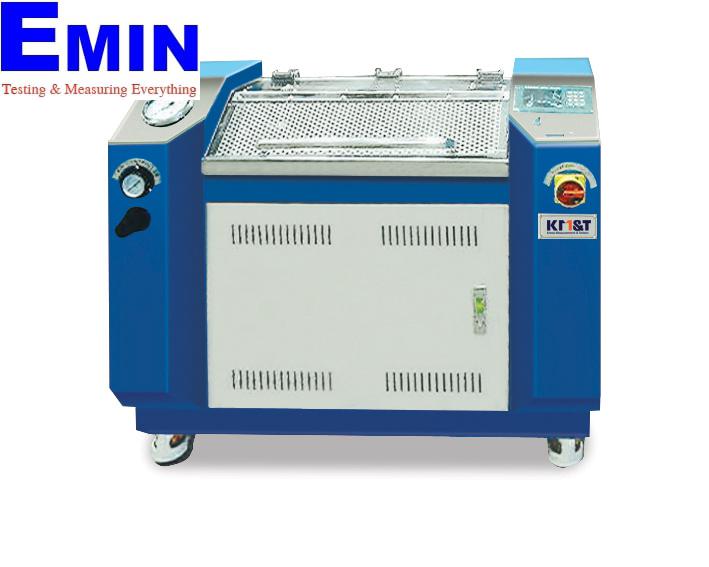
This category focuses on Bursting Pressure Tester solutions used to evaluate pressure resistance, burst behavior, and repeated hydraulic loading for products such as plastic pipes, metal pipes, rubber hoses, and similar test specimens. These systems are commonly selected by manufacturers, laboratories, and inspection teams that need reliable pressure generation and controlled test conditions for mechanical and physical testing workflows.
Where bursting pressure testing is used
Burst testing is typically applied when a component must withstand internal pressure without leaking, deforming excessively, or rupturing before a required threshold. This is especially relevant for pipe and hose production, where pressure capability is directly tied to service life, safety margin, and product acceptance.
Depending on the test method, users may need to perform a single burst test, a pressure resistance test over a defined period, or a repetition test that simulates cyclic loading. For teams working with related safety applications, broader test workflows may also involve equipment from gas cylinder test and maintenance equipment when the objective extends beyond hose and pipe validation.
What a bursting pressure tester helps you verify
A properly configured system supports more than one simple pass/fail result. It helps identify the pressure point at which a specimen fails, observe how pressure rises during the test, and evaluate whether the product maintains integrity throughout the test sequence. This is important for both development work and routine quality inspection.
In practical terms, a bursting pressure test can help teams compare material batches, check assembly quality, validate hose or pipe construction, and investigate failure mechanisms. When a product is expected to withstand repeated loading, repetition testing can add useful insight into long-term durability rather than just ultimate burst strength.
Representative equipment in this category
One example in this range is the KMT KTB-208 Bursting Pressure Tester, which is intended for pressure resistance testing of rubber hose and pipe. Based on the provided configuration, it uses a hydraulic pump method for pressurization and supports controlled testing within a dedicated chamber. This type of setup is suitable when stable hydraulic pressure application and enclosed test conditions are important parts of the procedure.
For applications that require repeated hydraulic loading, the KMT KTB-206 Hydraulic Repetition Tester provides a relevant example. It is described for pressure testing of plastic pipes and metal pipes, with a water pressure booster system and high-pressure capability. In category terms, this illustrates how bursting pressure test equipment may include both direct burst evaluation and repetition-based pressure testing depending on the product and test objective.
How to choose the right system
Selection usually starts with the specimen itself: hose, plastic pipe, metal pipe, or another pressure-bearing component. The test pressure range, pressure medium, required chamber size, and whether the test is destructive or cyclic all influence the most suitable configuration. A system intended for small flexible hose samples may not be ideal for longer or more rigid pipe sections.
It is also important to review the pressurization method and overall test setup. Some users prioritize hydraulic pump-based pressurization for controlled pressure resistance testing, while others need a water booster or air pump driven arrangement for specific repetition or high-pressure workflows. If your broader validation process includes thermal conditioning before or after pressure testing, related lab setups may also involve industrial furnaces as part of the overall material evaluation process.
Typical considerations in a testing workflow
In many facilities, bursting pressure testing is not isolated from the rest of the quality system. Samples may be conditioned, mounted with dedicated fixtures, pressurized according to an internal or customer-defined method, and then reviewed for rupture mode, leakage, or deformation. Repeatability matters, especially when test data is used to compare lots or support product qualification.
Users should also consider operational factors such as specimen changeover, chamber accessibility, pressure monitoring, and whether the system matches the intended throughput. For engineering teams performing broader barrier or durability studies, this category may sit alongside methods such as oxygen permeation system testing when evaluating how materials behave under different functional stresses.
Why manufacturer context matters
When comparing systems, the manufacturer’s specialization can be a useful indicator of fit for purpose. In this category, KMT is the featured manufacturer in the provided product range, with examples covering both burst testing and hydraulic repetition testing. That makes the brand relevant for buyers looking for pressure test equipment aimed at pipe and hose applications rather than general-purpose lab instruments.
Rather than focusing only on model names, it is more useful to assess whether the available equipment aligns with your actual test method, sample geometry, and target pressure conditions. Looking at representative products in context helps narrow down the shortlist faster and supports more meaningful technical discussions before purchase.
Finding the right bursting pressure tester for your application
The most suitable solution depends on what you need to prove: maximum burst strength, pressure resistance over time, or durability under repeated loading. By matching the tester to the specimen type, pressure range, pressurization method, and lab workflow, buyers can build a test setup that is practical for both development and routine inspection.
If you are reviewing options in this category, it helps to start with the intended application and then compare available systems such as the KMT bursting pressure and hydraulic repetition testers. A clear understanding of the test objective will make it much easier to select equipment that supports accurate results, safer operation, and more consistent product evaluation.
-
-
-
-
-
-
-
-
-
-
-
-
-
-
-
-
-
-
-
-
-
-
-
-