


Bolt Tension meter
In bolted joints, achieving the right preload is often more important than simply applying a target torque. Friction, surface condition, lubrication, and thread quality can all influence the final clamp load, which is why many engineers use a Bolt Tension meter to verify actual elongation, tension, or torque-tension behavior instead of relying on assumptions alone.
This category focuses on instruments and test systems used to monitor bolt tension, evaluate tightening performance, and support more reliable assembly control in industrial environments. It is especially relevant for maintenance teams, quality engineers, fastener testing labs, and manufacturers working with safety-critical or repeatability-sensitive bolted connections.
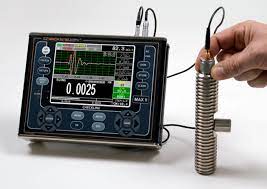
Why bolt tension measurement matters
A bolted joint performs correctly when the required preload is achieved and maintained. If the preload is too low, the joint may loosen, leak, or shift under load. If it is too high, the fastener can be overstressed or the clamped parts may deform, leading to premature failure.
That is why bolt tension monitoring is widely used in applications where clamp force, tightening consistency, and traceable measurement are important. Compared with torque-only checks, bolt tension measurement provides a more direct view of what is happening in the joint, helping teams improve assembly validation, incoming fastener evaluation, and process development.
Typical equipment found in this category
This category includes both portable ultrasonic bolt monitors and larger bench-type tester systems. Portable devices are commonly selected for field inspection, maintenance, and preload verification on installed fasteners. Bench systems are more suitable for controlled testing of bolts and nuts where torque, angle, clamping force, and displacement need to be evaluated together.
Examples include the Dakota BT1-DL Bolt Tension Monitor and the Dakota BT2-DL, which are used for ultrasonic measurement of bolt elongation across a wide range. For more comprehensive fastener performance testing, models such as the JISC NST-100NM, NST-500NM, NST-1000NM, and NST-1500NM provide a structured platform for analyzing tightening torque, thread torque, clamping force, angle, and displacement in one setup.
Ultrasonic bolt monitors for preload verification
Ultrasonic bolt tension measurement is a practical method when direct observation of elongation is needed. These instruments send an ultrasonic pulse through the fastener and evaluate the change in transit time as the bolt stretches under load. In many maintenance and quality-control tasks, this approach helps users estimate preload more reliably than torque alone.
Dakota is one of the key brands represented in this category, with solutions such as the BT1-DL, BT2-DL, MAX II Ultrasonic Bolt Monitors, and MINI MAX Ultrasonic Bolt Monitors. The BT series is also supported by dedicated accessories like the Dakota T-706-2405 Single Element Contact Magnetic Transducer, which is designed for use with BT1-DL and BT2-DL series thickness gauges and helps maintain stable contact during measurement.
Bolt and nut tester systems for laboratory and production analysis
When the goal is not only to check final preload but also to understand tightening behavior, a dedicated bolt and nut tester can provide deeper insight. These systems are useful for fastener development, validation of tightening conditions, comparison of coatings or lubricants, and quality assurance under repeatable test conditions.
JISC NST series testers in this category cover different torque capacities, from compact lower-range testing up to 1500 Nm class applications. Their measurement structure is suited to users who need to analyze the relationship between applied torque and resulting clamping force, while also observing angle and displacement. For semi-automatic operation, the Sushma BTM-102 torque tester / bolt torque tension measuring system can also be relevant where process support and operator-guided testing are required.
How to choose the right bolt tension meter
The first selection point is the measurement method. If you need portable inspection of installed bolts, an ultrasonic monitor is often the more practical choice. If you need to characterize fasteners, compare tightening conditions, or validate assembly methods in a controlled environment, a bench tester is usually more appropriate.
The second factor is the required range and resolution. Large industrial joints may need a wider measurement span, while precision fastening work may demand finer resolution and better control of low-range torque or displacement. It is also important to consider probe compatibility, data transfer requirements, display format, operating environment, and whether the workflow is field-based, laboratory-based, or integrated into production quality control.
In some applications, bolt tension data is reviewed alongside broader force or strain measurement signals. Depending on the system architecture, related devices such as load cell transmitters or dedicated strain meters may also be part of the measurement chain.
Common industrial applications
Bolt tension meters are used wherever the integrity of a bolted joint affects performance, safety, or repeatability. This includes heavy equipment assembly, structural fastening, maintenance of critical machinery, flange tightening verification, rotating equipment service, and R&D work related to fastener behavior.
Portable ultrasonic units are especially useful when joints are already installed and dismantling is undesirable. Bench-type systems are more common in test laboratories, fastener manufacturing, and engineering departments that need to compare bolt, nut, and lubrication combinations under repeatable conditions. In both cases, the objective is the same: better understanding of actual joint behavior rather than relying on nominal torque alone.
What to look for in day-to-day use
Beyond core specifications, practical usability matters. Engineers often look for stable probe contact, clear display readability, manageable device size, appropriate power options, and simple data handling for documentation or traceability. In field service, portability and battery operation can be more important than advanced bench-test functions. In laboratory work, repeatability and multi-parameter analysis usually take priority.
It is also worth considering how the instrument will fit into the wider testing process. Some users only need periodic bolt preload checks, while others need a system that supports development, acceptance testing, and reporting across multiple fastener sizes. Choosing the right tool depends on whether your priority is verification, analysis, or process improvement.
Finding a suitable solution for your fastening task
This category brings together instruments for both direct bolt elongation measurement and broader torque-tension evaluation. From portable Dakota ultrasonic monitors to JISC bolt and nut tester systems and semi-automatic Sushma equipment, the available range supports different workflows, from field inspection to controlled test-room analysis.
If your application depends on reliable preload, consistent clamp force, or deeper understanding of fastener performance, selecting the right bolt tension meter can make the measurement process far more meaningful. Reviewing the intended use case, required range, and preferred measurement method is usually the best starting point for narrowing down the most suitable option.
-
-
-
-
-
-
-
-
-
-
-
-
-
-
-
-
-
-
-
-
-
-
-
-