


Force - Hardness- Roughness- Gloss Measurement
Reliable quality control depends on more than one reading. In many industrial environments, engineers need to evaluate how a surface behaves under load, how hard a material is, how smooth a finish has become, or how consistently a coating reflects light. These checks support product performance, process stability, and inspection traceability across manufacturing, maintenance, and laboratory workflows.
Force, hardness, roughness, and gloss measurement brings together several closely related inspection tasks that are often used in the same production chain. From incoming material verification to final appearance checks, this category helps teams compare results, monitor tolerances, and choose the right measurement approach for mechanical properties and surface quality.
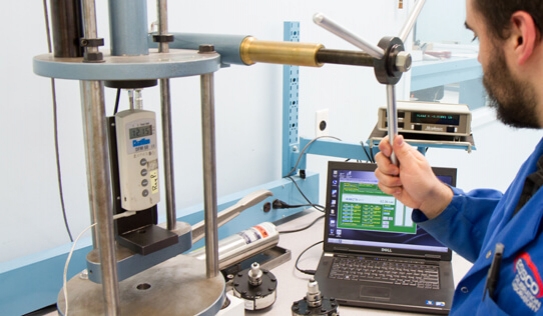
Why these measurements matter in industrial inspection
Mechanical and surface characteristics directly affect how a product performs in use. Force testing can indicate whether an assembly, spring, or component responds within the expected load range. Hardness testing helps verify material condition, heat treatment results, and resistance to deformation. Roughness evaluation supports machining and finishing control, while gloss measurement is commonly used to assess coating appearance and surface consistency.
Although each method serves a different purpose, they are often connected in practice. A part may need acceptable hardness for durability, controlled roughness for sealing or friction behavior, and stable gloss for visual quality. Grouping these measurement areas in one category makes it easier to review tools and services that support both functional testing and surface evaluation.
Typical applications across production and quality assurance
These measurement methods are widely used in metalworking, plastics processing, automotive supply chains, electronics manufacturing, coating inspection, and general industrial quality control. In a machining environment, roughness measurement helps confirm whether a milled or ground surface meets the required finish. In heat-treated parts, hardness checks are often part of routine verification before components move downstream.
Force measurement is also important in assembly validation, packaging tests, connector insertion testing, and basic material handling studies. Gloss evaluation, meanwhile, is especially relevant in painted, plated, polished, laminated, and coated products where visual uniformity matters alongside technical performance. In many cases, these inspections complement related measurement workflows such as length measurement or optical measurement.
Understanding the role of each measurement type
Force measurement is used when the objective is to quantify load, compression, tension, push-pull behavior, or reaction force during a test. It is useful for checking product consistency, comparing mechanical response, and identifying variation in assembly or material behavior. The chosen setup depends on the expected force range, fixture arrangement, and required repeatability.
Hardness measurement focuses on a material’s resistance to indentation or related test methods, depending on the application standard and specimen characteristics. It is commonly selected when users need to compare batches, confirm treatment processes, or evaluate whether a material meets the intended performance level. Practical selection often depends on sample geometry, test method, and whether the inspection is performed in the lab or near the production line.
Roughness measurement is relevant when the texture of a surface influences fit, wear, friction, sealing, coating adhesion, or appearance. It supports decisions in machining, finishing, polishing, and process optimization. Gloss measurement, by contrast, is mainly used to evaluate reflected light from a surface, which helps control visual consistency in coatings and decorative finishes.
How to choose the right solution for your process
The best starting point is the inspection goal. Some users need fast comparative checks for routine production, while others require traceable measurement data for audits, validation, or customer documentation. Before selecting equipment or a service scope, it is useful to define the sample type, expected measurement range, required accuracy, test frequency, and whether the task is performed at-line, in-process, or in a controlled laboratory setting.
Surface condition, operator skill, and measurement environment also influence the result. For example, roughness and gloss readings can be affected by sample preparation, cleanliness, and positioning, while hardness and force testing depend heavily on proper contact conditions and stable test setup. When broader dimensional or process verification is needed, users may also review related areas such as pressure measurement or mass measurement to build a more complete inspection workflow.
Calibration, repeatability, and practical inspection quality
Measurement value is not only about the instrument itself but also about consistency over time. In industrial B2B settings, repeatable methods are essential for reducing disputes between production, quality, and customer requirements. Proper calibration, suitable reference standards, and clear operating procedures help ensure that results remain comparable across shifts, sites, and product batches.
This is especially important when results are used for acceptance decisions or process adjustment. A force reading that drifts, a hardness test performed with poor sample support, or a gloss check done under inconsistent conditions can lead to misleading conclusions. For that reason, many companies treat these measurement activities as part of a wider quality system rather than isolated inspection steps.
Supporting process control from incoming inspection to final release
One of the advantages of this category is its relevance across the entire production cycle. During incoming inspection, hardness or surface checks can help verify raw material condition and supplier consistency. During manufacturing, roughness and force-related checks may be used to monitor machining, assembly, or forming performance. At the final stage, gloss and surface quality measurements can support appearance approval and release documentation.
Because these tasks often appear together in real production environments, buyers and engineers typically look for solutions that fit their inspection plan rather than a single isolated parameter. A well-matched measurement setup can improve process visibility, shorten troubleshooting time, and support more confident quality decisions.
Finding the right category for your measurement needs
This category is intended for users who need practical solutions around material response and surface quality evaluation. Whether the priority is checking load behavior, verifying hardness, controlling surface finish, or reviewing coating appearance, the key is to align the method with the actual application and the level of control required by the process.
If your workflow involves multiple inspection points, it is worth comparing related measurement categories alongside this one to create a more complete quality control structure. With the right combination of measurement methods, teams can improve consistency, document results more clearly, and make inspection decisions with better technical confidence.
-
-
-
-
-
-
-
-
-
-
-
-
-
-
-
-
-
-
-
-
-
-
-
-