


Short connector
Reliable RF and telecom assemblies often depend on very small components that are easy to overlook until signal integrity becomes a problem. In many bench, lab, broadcast, and communication setups, a short connector is used to create a direct, compact connection between compatible interfaces where extra cable length is unnecessary or undesirable.
This category focuses on short connector options used in telecommunication component environments, especially for applications that require stable mating, compact installation, and consistent mechanical fit. The available range includes common interface styles such as SMA, N, BNC, and TNC, helping engineers and buyers match connector type to the equipment, cable path, and frequency-related handling requirements of the system.
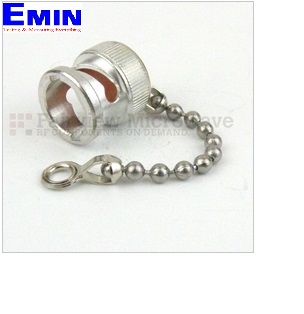
Where short connectors are typically used
Short connectors are commonly selected when equipment ports need a direct interconnect without introducing unnecessary cable routing. This can be useful in RF test benches, telecom racks, antenna feed arrangements, signal distribution assemblies, and compact instrument connections where space and connector orientation matter.
Because these parts sit at the physical connection point, they influence both mechanical reliability and day-to-day serviceability. A well-matched connector helps reduce strain at the interface, supports repeatable installation, and simplifies maintenance when components are swapped or reconfigured.
Common interface types in this category
The products in this range cover several widely used RF connector formats. SMA connectors are often chosen for compact RF and microwave assemblies, while N connectors are frequently preferred where a more robust threaded interface is needed. BNC and TNC styles remain relevant in many instrumentation and communication setups because they support familiar installation practices and broad equipment compatibility.
Examples in this category include SMA-Male and SMA-Female options, N-Male variants, BNC-Male versions, and TNC-Male designs. If your application requires changing connector format rather than making a direct short connection, it may be more appropriate to review RF adapters for interface conversion.
How to choose the right short connector
The first checkpoint is simple: confirm the exact interface and gender required by the equipment port. Even within visually similar RF families, mismatch can lead to improper mating, unstable contact, or damage during installation. For that reason, buyers should verify connector family, gender, and the intended installation arrangement before ordering.
The second consideration is the broader operating environment. In telecom and measurement systems, connector choice is usually influenced by available space, mechanical access, and the need for a direct or low-profile connection. When the assembly is part of a more complex RF path involving signal routing or branching, related components such as a power divider may also be relevant during system planning.
Representative products available
This category includes several practical examples from Fairviewmicrowave, covering multiple connector families for telecom and RF integration. On the SMA side, examples include the M39012/25-3025 (SMA-Male), M39012/25-3024 (SMA-Male), and M39012/25-3026 (SMA-Female), which are suitable references when a compact threaded RF interface is needed.
For applications built around larger threaded interfaces, the range also includes N-Male models such as M39012/25-0012, M39012/25-0011, and M39012/25-0111. Users working with instrumentation or communication hardware that relies on other common interfaces can also find BNC-Male products like M39012/25-0007 and M39012/25-0006, as well as TNC-Male options including SC2067, M39012/25-0021, SC2065, and SC2182.
Role in a broader telecommunication component system
A short connector rarely works in isolation. In real installations, it is part of a larger chain that may include switches, isolating elements, signal distribution hardware, and interface conversion components. Choosing the right connector helps preserve a cleaner signal path and reduces avoidable mechanical complexity inside the assembly.
For example, if the line architecture includes routing and path selection, telecommunication switches may be part of the same project scope. If signal protection or directional behavior is part of the design, neighboring component categories such as isolator products may also be relevant during procurement and integration.
Why connector matching matters in technical purchasing
In B2B procurement, the cost of choosing the wrong connector is usually not the component price alone. Ordering errors can delay commissioning, create fitting issues on site, or require additional adapter parts that complicate the RF path. That is why many technical buyers start with interface verification first, then shortlist by form factor and installation needs.
For maintenance teams, standardizing on the correct short connector type can also simplify spare-part handling across multiple systems. A clear match between port type and connector style reduces installation uncertainty and supports faster replacement in field or lab environments.
Selection guidance for engineers and buyers
When comparing options in this category, focus on three practical points: connector family, connector gender, and how the part will sit within the physical layout. This is especially important in dense panels, instrument clusters, and telecom cabinets where access is limited and connection points may be closely spaced.
If your requirement is a direct, compact RF connection using established interface types such as SMA, N, BNC, or TNC, this category offers a focused starting point. Reviewing a few representative models from the available range can help narrow the selection before moving into project-specific fit and compatibility checks.
Short connectors may be small parts, but they play an important role in keeping telecom and RF assemblies practical, maintainable, and properly interconnected. By selecting the right interface and using compatible components across the signal chain, buyers can build cleaner connection layouts and reduce unnecessary integration issues later in the project.
-
-
-
-
-
-
-
-
-
-
-
-
-
-
-
-
-
-
-
-
-
-
-
-