


Phase Trimmer
Precise timing and phase control are critical in advanced optical and telecommunication measurement setups. When a system depends on stable synchronization between pulses, channels, or interferometric paths, a Phase Trimmer becomes an important part of the signal-conditioning chain, helping engineers fine-tune phase relationships and improve repeatability in demanding laboratory and integration environments.
On this page, you can explore phase trimming solutions used in high-precision optical and electronic applications. The category is especially relevant for users working with ultrafast sources, interferometric assemblies, and telecom-related measurement systems where even small phase deviations can affect accuracy, stability, or long-term performance.
Where phase trimming fits in a measurement system
In practical setups, phase trimming is used to correct or stabilize the relative phase between signals or optical paths. This can be important in test benches, research instruments, and communication-related assemblies where signal integrity depends not only on amplitude and frequency, but also on phase alignment.
Unlike general connection hardware, a phase trimmer is typically selected when the application requires controlled adjustment rather than simple routing. In a broader signal chain, it may work alongside components such as an isolator to manage reflections or a power divider to distribute signals while preserving system balance.
Typical applications for phase trimmers
Phase trimming solutions are commonly considered in environments where timing drift and phase noise have a direct effect on measurement quality. This includes interferometric experiments, ultrafast laser synchronization, high-speed telecom testing, and specialized instrumentation where the relationship between periodic signals must remain controlled over time.
In optical and photonics work, phase stabilization can support cleaner interference conditions and more reliable pulse-to-pulse behavior. In communication and RF-related assemblies, it can contribute to channel matching, path compensation, and calibration workflows, especially when multiple components interact in a compact measurement architecture.
Example solution in this category
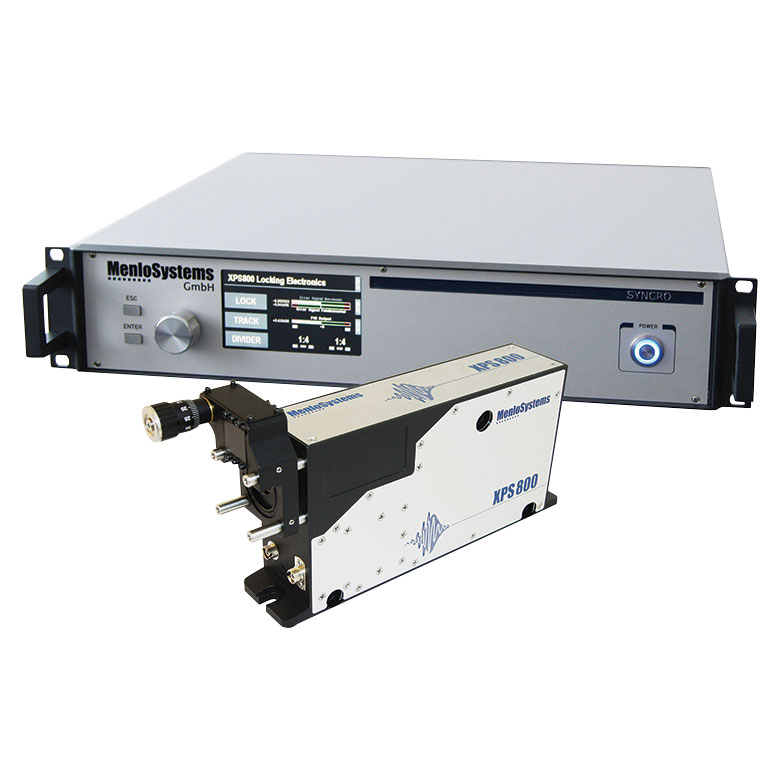
A representative product in this category is the THORLABS platform for phase stabilization, including the THORLABS XPS800 Femtosecond Oscillator Phase Stabilization system. This example is geared toward femtosecond oscillator applications and highlights the type of specialized equipment typically associated with phase-sensitive optical setups.
Based on the provided data, the XPS800 supports operation around 800 nm or 1000 nm and is designed for use with high-repetition-rate ultrafast sources. Rather than treating it as a generic telecom accessory, it is more accurate to view this kind of device as part of a stabilization and synchronization solution for precision optical measurement environments.
How to evaluate a phase trimmer for your setup
The right choice depends heavily on the structure of the system around it. Engineers usually start by checking wavelength or signal-domain compatibility, the nature of the source, the required stability level, and whether the device is meant for standalone adjustment or integration into a broader stabilized platform.
Mechanical footprint and installation format also matter, particularly in lab racks and compact instrument builds. If the application includes several connected telecom components, it may also be useful to review related hardware such as adapters for interface matching or telecommunication switches when the setup requires controlled signal path selection.
Selection factors that affect performance
For demanding applications, phase trimming performance is not just about adjustment capability. Users should also consider long-term drift behavior, environmental sensitivity, source compatibility, and how the device interacts with upstream and downstream elements. In high-precision systems, small mismatches can accumulate and reduce the benefit of otherwise capable instrumentation.
Another important point is integration with control electronics. Some systems are designed as part of a stabilized assembly that includes interferometric hardware and dedicated electronics, which can simplify deployment in research or test environments. This is especially relevant when the goal is not only manual tuning, but also phase stabilization under changing operating conditions.
Why this category matters in telecom and photonics workflows
Although phase trimmers may appear niche compared with more familiar passive components, they play a meaningful role in systems where coherence, synchronization, or timing accuracy directly affects the final result. In those situations, stable phase control can support better measurement confidence, smoother setup optimization, and improved repeatability during operation.
This makes the category relevant not only to photonics laboratories, but also to engineers building or maintaining specialized telecom test platforms. When the application moves beyond basic connectivity and into precision signal management, phase trimming becomes part of the broader ecosystem of components used to refine system behavior.
Find the right phase trimming solution
Choosing a phase trimmer starts with understanding the real operating conditions of the system: source type, wavelength or signal requirements, stability goals, and the surrounding measurement architecture. A well-matched solution can help reduce phase-related errors and support more dependable operation in advanced optical and communication setups.
Explore the products in this category to identify solutions suited to your application, whether you are working on ultrafast optical stabilization, telecom measurement, or a custom high-precision test arrangement. When phase control is a critical parameter, selecting the right equipment can make the overall system easier to tune, validate, and maintain.
-
-
-
-
-
-
-
-
-
-
-
-
-
-
-
-
-
-
-
-
-
-
-
-