


SMT Screen Printer
Accurate paste deposition is one of the first steps that sets the tone for SMT assembly quality. When stencil alignment, print repeatability, and board support are handled properly, downstream processes such as component placement, reflow, inspection, and rework become more stable and predictable. That is why many production teams, prototype labs, and electronics service providers pay close attention when selecting an SMT screen printer.
This category brings together equipment used for solder paste or similar material printing in electronics manufacturing, from compact manual units for low-volume work to more capable semi-automatic platforms for repeatable stencil printing. The range is relevant for PCB assembly, prototyping, repair support, and small-to-medium production environments where process control matters but flexibility is still important.
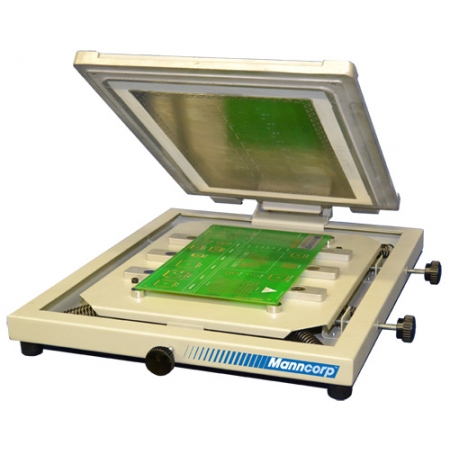
Where SMT screen printers fit in the assembly process
In an SMT line, the printer applies solder paste onto PCB pads through a stencil before pick-and-place and reflow. Even when the rest of the line is well configured, inconsistent printing can lead to insufficient solder, bridging, tombstoning, and other defects that are difficult to correct later. For that reason, the printer is not just a support tool; it is a process-critical station.
Manual and semi-automatic systems are commonly used where product mix changes frequently, batch sizes are moderate, or engineering teams need flexibility during NPI and prototyping. They are also a practical choice for maintenance departments, educational labs, and operations that combine assembly with hand finishing using soldering stations.
Typical equipment types in this category
The products in this category cover several levels of printing control. Manual stencil printers are usually chosen for simple, cost-conscious workflows where trained operators handle board positioning and print cycles directly. These systems are useful for low-volume PCB assembly, quick trials, and work cells that do not require higher automation.
Semi-automatic stencil printers add more consistency through controlled movement, guided alignment, and more repeatable printing action. Models such as the REN THANG STP-550 or the Manncorp 5500 illustrate this step up, helping users improve repeatability while keeping the process accessible for flexible production. Compact manual options like the Manncorp RT2100 or REN THANG STP-450 remain relevant where footprint and simplicity are priorities.
Representative brands and product examples
MANNCORP is a notable presence in this category with models aimed at different board sizes and production needs. The MC110 is positioned for manual PCB screen printing, while the MC110LED addresses larger LED-related work areas. The 4500R and 5500 are also useful references for buyers comparing precision manual printing versus dual-squeegee configurations.
REN THANG adds practical manual and semi-automatic options, including the STP-450 and STP-550. These examples are relevant when the goal is straightforward stencil printing for PCB assembly without moving into a fully automated line. Although OAI is better known here for mask aligner systems such as the OAI 200, OAI 212, OAI 800E, OAI 6000, and OAI 6020, those products also help clarify the broader landscape of precision pattern transfer equipment used in electronics and microfabrication environments.
Key selection factors for industrial buyers
Choosing the right printer starts with the physical format of the work. Buyers usually compare stencil frame size, maximum PCB dimensions, X-Y-Theta adjustment range, Z clearance, and the type of squeegee mechanism. These factors affect whether the equipment can handle standard boards, larger LED panels, or special assemblies with unusual layouts.
Repeatability is another major consideration. In practice, users should look beyond simple dimensional capacity and consider how easily the machine supports accurate alignment from one board to the next. For prototype work, a manual platform may be sufficient. For recurring production, a semi-automatic machine can reduce operator variation and improve consistency over longer runs.
Utilities and workspace requirements also matter in B2B purchasing. Some printers are compact tabletop units, while others need more bench depth, compressed air, or dedicated fixtures. If the printer will be used as part of a broader repair or process engineering cell, it may also make sense to review related equipment such as hot air rework systems for post-print and assembly support.
Manual vs semi-automatic: which is better for your workflow?
A manual printer is often the right fit when production volume is low, product variety is high, and process engineers want direct control over setup. These machines are commonly selected for prototype labs, short-run contract work, training environments, and maintenance departments that assemble or repair boards as needed rather than on a fixed high-throughput schedule.
A semi-automatic printer becomes more attractive when the same design is printed repeatedly and process repeatability carries more weight. Controlled print stroke, stable alignment features, and better handling of stencil positioning can help reduce inconsistency between operators and shifts. This can lower the burden on later correction steps, including inspection and BGA rework when defects originate earlier in the process.
Application scenarios across electronics manufacturing
SMT screen printers are used in many environments beyond classic high-volume PCB assembly. Common use cases include prototype board builds, pilot production, LED board manufacturing, electronics repair departments, educational labs, and specialized assembly cells that handle varied products in short batches. In these settings, flexibility and changeover convenience can be as important as speed.
Some organizations also compare stencil printing equipment with more specialized alignment or lithography-style systems when the application involves finer pattern transfer requirements. OAI systems in this category are an example of how requirements can extend into mask alignment and precision exposure processes, especially in advanced research or semiconductor-adjacent workflows. That broader context helps buyers distinguish standard solder paste printing from more specialized photolithography-related equipment.
Practical buying considerations before ordering
Before selecting a model, it is useful to define the target board range, stencil format, expected paste type, and daily throughput. Buyers should also consider who will operate the machine, how often job changeovers occur, and whether the printer must support future product formats. These questions often narrow the shortlist quickly.
It is also worth checking how the printer will fit into the existing process around placement, soldering, inspection, and repair. A machine that looks suitable on paper may be less effective if it creates bottlenecks in setup or requires fixtures that are not practical for the actual workflow. A balanced selection usually comes from matching printing capability with the real production mix, not from choosing the most complex platform available.
Finding the right SMT screen printer for your process
This category is designed for buyers who need a clearer path through manual and semi-automatic stencil printing options for electronics assembly. Whether the requirement is a compact unit for bench-top prototype work, a larger printer for LED boards, or a more repeatable semi-automatic platform, the best choice depends on board size, print consistency targets, and operator workflow.
By comparing capability in context rather than focusing on isolated specifications, teams can select equipment that supports stable solder paste printing and more efficient downstream assembly. If you are building or refining an SMT process, this range provides a practical starting point for matching the printer to your actual production environment.
-
-
-
-
-
-
-
-
-
-
-
-
-
-
-
-
-
-
-
-
-
-
-
-