


Desoldering Stations
Clean pad preparation, component recovery, and rework quality often depend on how consistently solder can be removed without overheating the board. In electronics assembly and repair, a Desoldering Station helps technicians clear through-hole joints, remove excess solder, and service populated PCBs with better temperature control and vacuum performance than manual tools alone.
This category brings together benchtop systems used in production, maintenance, and rework environments where stable heat, reliable suction, and ESD-conscious handling matter. It is especially relevant for users working with mixed-volume repair, SMT support tasks, and repeated component replacement on sensitive assemblies.
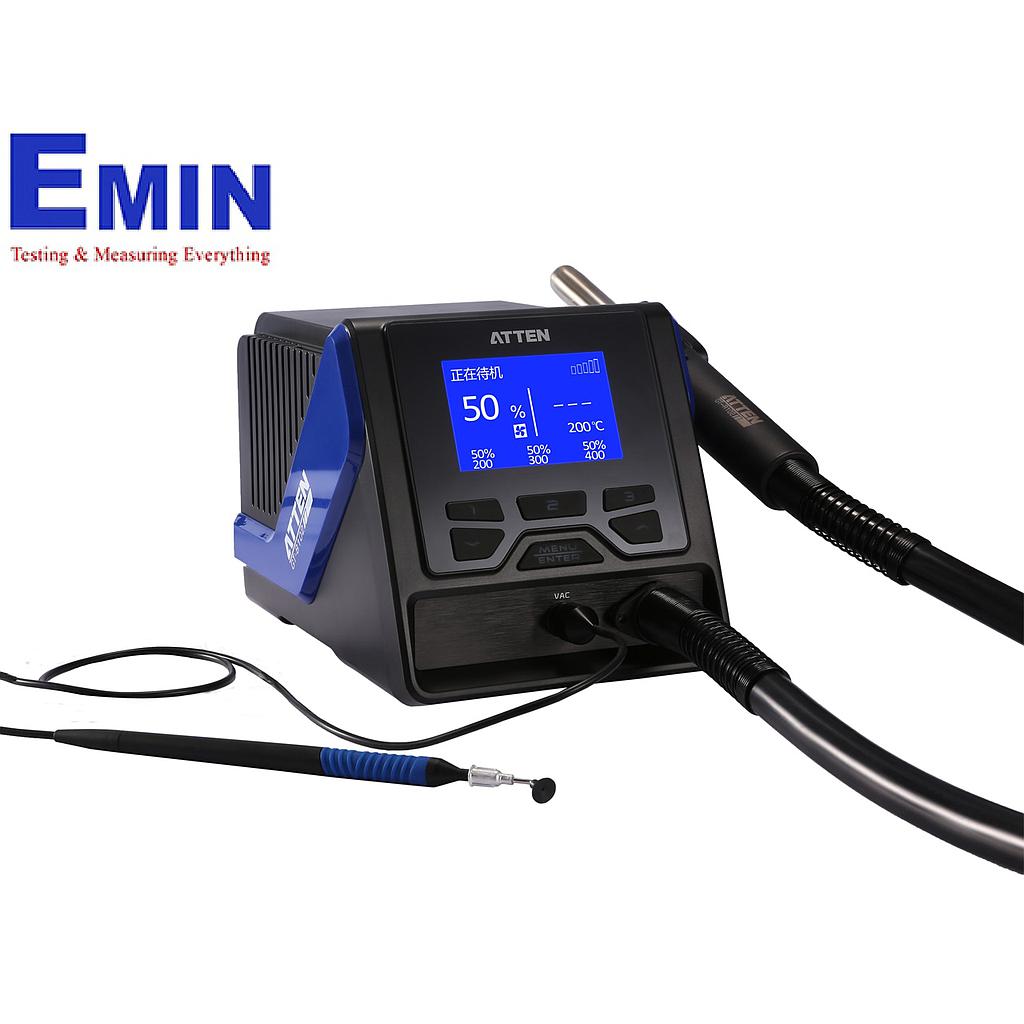
Where desoldering stations fit in an electronics workflow
A dedicated station is typically chosen when solder removal needs to be repeatable, clean, and efficient across many joints. Compared with basic hand pumps or wick-only methods, these systems combine controlled heating with vacuum extraction, helping reduce dwell time on pads and lowering the risk of lifted tracks or incomplete solder removal.
They are commonly used for connector replacement, through-hole component removal, repair of industrial control boards, and service work on power supplies, communication modules, and embedded electronics. In workshops that also perform new assembly, teams often pair them with soldering stations to cover both installation and removal tasks on the same bench.
Key features to compare before selecting a system
The first point to assess is temperature control. Stable heat delivery supports cleaner solder flow and more predictable extraction, especially on multilayer boards or joints connected to larger copper areas. Some models in this category use microprocessor or feedback-based control, while others rely on dial-based adjustment for straightforward day-to-day operation.
The second factor is the vacuum system. Depending on the model, suction may come from a self-contained pump, diaphragm pump, air pump motor, compressed-air venturi arrangement, or external air supply. This affects maintenance requirements, portability, noise profile, and suitability for lines where compressed air is already available.
It is also worth checking ESD-related characteristics, tip-to-ground values, and serviceability items such as filters, hoses, nozzles, and replacement connectors. For users who only occasionally clear solder bridges or small joints, consumables such as Proskit desoldering accessories and wick can be a useful part of the overall rework setup alongside a full station.
Representative equipment in this category
For precision-oriented work, the JBC CS-2F Station Precision Desoldering is a good example of a compact system designed around controlled temperature operation and vacuum-assisted removal. Its operating range and ESD-safe design make it relevant for users handling sensitive boards where process stability matters as much as solder extraction speed.
Users looking for broader rework capability may consider systems such as the PACEWORLDWIDE ST 125 and ST 125 E rework stations, as well as the ST65E with SX-100 Sodr-X-Tractor. These types of platforms are often selected when desoldering is part of a larger service bench process rather than a standalone task.
Other examples in the category illustrate different operating styles. The Proskit SS-331B suits general bench repair with an integrated vacuum approach, while the WELLER WXD 2010 shows a higher-feature station format with wide adjustable temperature capability and interface functions. Techno TOP-450, TOP-452, and TOP-453 models highlight variations in display format and vacuum source, giving buyers practical options based on workflow preference.
Choosing by application, volume, and board type
If your work mainly involves intermittent repair of conventional through-hole parts, a moderate-power station with straightforward controls may be enough. In this scenario, ease of maintenance, quick warm-up, and availability of routine replacement parts can be more important than advanced interface features.
For frequent service work, production support, or repair benches handling multiple board types per day, it is often better to prioritize vacuum consistency, thermal stability, and ergonomic handpiece design. These factors can make a noticeable difference when removing connectors, transformers, relays, or other components with multiple soldered pins.
Where rework extends beyond through-hole removal into broader SMT tasks, it can be useful to evaluate nearby categories such as hot air rework systems or more advanced BGA rework equipment. That gives buyers a clearer view of whether they need a dedicated desoldering tool, a mixed-function rework station, or a wider bench ecosystem.
Accessories and consumables that support long-term use
A desoldering process is only as reliable as the condition of the components around the handpiece. Filters, traps, hoses, tips, and connectors all influence suction quality and routine uptime. For example, the Proskit 5SS-331N-AN Air Hose Connector serves as a replacement part within the SS-331 setup, showing how support items help keep a station working properly over time.
Desoldering wick also remains useful even when a vacuum station is available. Products such as the Pro'skit 8PK-031B wick can help clean residual solder after bulk extraction, prepare pads for reinstallation, or handle tight areas where final cleanup is needed. In practice, many technicians combine both methods to improve finish quality on repair jobs.
Brand coverage and buying considerations
This category includes recognized names used across electronics manufacturing, repair, and service environments, including JBC, HAKKO, PACEWORLDWIDE, Proskit, WELLER, and Techno. Each brand may appeal to a different balance of priorities, from compact bench use and accessory availability to rework-oriented configurations and process control features.
When comparing options, focus on the actual task: component type, board sensitivity, daily operating hours, and whether your bench already uses compressed air or other companion rework tools. It is also sensible to check how replacement consumables fit into your maintenance routine, since ongoing usability matters just as much as the station’s initial specification.
Finding the right desoldering setup
The best fit usually comes from matching the station to the board, the workload, and the operator’s rework process rather than choosing by wattage alone. A compact unit may be enough for occasional service, while higher-duty environments often benefit from stronger process consistency, easier upkeep, and a tool ecosystem that supports continuous use.
Whether you are equipping a repair bench, supporting electronics production, or upgrading from manual solder removal methods, this range of Desoldering Stations helps narrow the choice to practical systems for controlled, repeatable rework. Reviewing vacuum method, temperature behavior, accessories, and application scope will make selection more accurate and more sustainable in day-to-day operation.
-
-
-
-
-
-
-
-
-
-
-
-
-
-
-
-
-
-
-
-
-
-
-
-