

Cover Meter & Rebar Detector
When working on reinforced concrete, knowing what lies beneath the surface is essential before drilling, coring, cutting, repair, or structural evaluation. A Cover Meter & Rebar Detector helps inspectors, contractors, and testing teams locate embedded steel, estimate cover depth, and in many cases identify bar diameter or deeper subsurface targets without damaging the structure.
This category brings together instruments used for concrete investigation, rebar mapping, and non-destructive verification in construction, civil engineering, and asset maintenance. The range includes compact cover meters for routine site checks, advanced rebar scanners for documentation work, and ground penetrating radar systems for broader subsurface assessment.
Where these instruments are used
Rebar detection is a common requirement in bridge inspection, building renovation, tunnel maintenance, precast quality control, and structural condition surveys. Before anchor installation or core extraction, technicians need to confirm the position of steel reinforcement and verify concrete cover to reduce the risk of striking embedded bars.
These tools are also useful when checking construction quality against design intent, assessing corrosion risk through cover thickness, or preparing for complementary tests. In many workflows, rebar locating is combined with methods such as ultrasonic pulse velocity or surface strength checks to build a more complete picture of structural condition.
What a cover meter or rebar detector typically measures
The core task of this equipment is to identify the position of reinforcement inside concrete. Depending on the device type, users may also measure concrete cover depth, estimate rebar diameter, distinguish scanning zones, or detect different embedded materials behind walls and slabs.
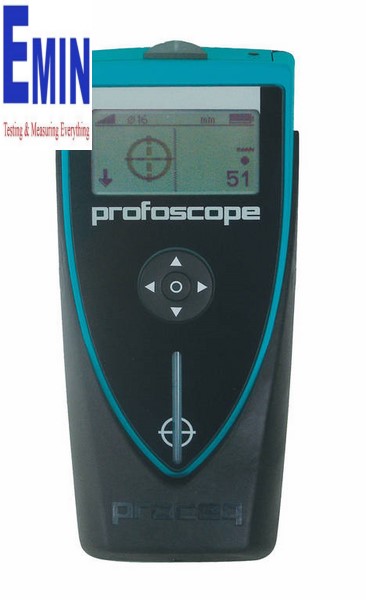
Electromagnetic and eddy-current based instruments are commonly selected for rebar location and cover measurement at relatively shallow depths. For example, the PROCEQ PM8000 Lite Rebar Diameter and Cover Meter is designed for cover and diameter evaluation, while models such as the T-measurement TEM-620XH Basic Rebar Scanner focus on practical rebar scanning over typical inspection ranges.
For more general wall inspection tasks, the T-measurement MD120 Wall Scanner adds value by detecting not only metal but also other hidden elements encountered during installation or maintenance work. This makes it useful in facility projects where the goal is to avoid hidden objects before drilling rather than to perform a full structural survey.
From rebar locators to GPR systems
Not every project requires the same level of depth, resolution, or documentation. A handheld rebar locator is often the right choice for routine checks on slabs, beams, columns, and walls where the main need is to mark bar position and verify cover quickly on site.
Examples in this category include Samyon instruments such as the SYR51 Rebar Locator System, SYR51+ Concrete Rebar Locator, and SY81 Integrited Rebar Locator. These devices fit applications where speed, portability, and straightforward interpretation are important for field personnel performing repeated measurements.
When the inspection scope goes beyond near-surface steel, ground penetrating radar becomes more relevant. Systems such as the PROCEQ GP8000, GP8000 Lite, GP8100, and GP8800 are intended for wider subsurface imaging tasks, helping users evaluate deeper features and scan larger areas of reinforced concrete. For underground utility locating and mapping, the MADE PinPointR provides another route when the target extends beyond standard building rebar work.
How to choose the right system
Selection should start with the inspection objective rather than the device name. If the main task is locating reinforcement and checking cover before drilling or repair, a compact cover meter may be sufficient. If documentation, scan visualization, or more complex interpretation is required, a higher-level scanner may be a better fit.
Depth requirement is another key factor. Near-surface measurements can often be handled efficiently with dedicated cover meters, while deeper investigations may call for radar-based equipment. It is also worth considering whether the job requires only bar location or additional outputs such as diameter estimation, scan grids, stored data, or software-assisted reporting.
For teams managing multiple test methods, it can be practical to align rebar detection with other concrete evaluation tools. For example, rebound testing with a concrete test hammer may be used alongside cover measurement during condition assessment, especially when decisions depend on both reinforcement position and surface hardness.
Technology differences and practical implications
Electromagnetic rebar detectors are valued for fast setup, portability, and efficient scanning of reinforced concrete members. They are often preferred for routine QA/QC work, bar spacing checks, and cover verification in standard structural elements. In the field, these tools help operators mark steel layout quickly and reduce unnecessary destructive investigation.
Radar-based systems bring broader imaging capability and can support more complex interpretation where multiple layers, deeper targets, or larger scan areas are involved. In the PROCEQ range, different models address different balances between penetration depth, frequency range, and portability, allowing users to choose according to the structure and survey goal. If a project also involves durability concerns, rebar locating may be paired with rebar corrosion detection to better understand long-term reinforcement condition.
Brands and representative products in this category
This category includes solutions from PROCEQ, Samyon, MADE, and T-measurement, covering both routine inspection and more advanced scanning workflows. PROCEQ is represented here by cover meters and several GP-series radar platforms, giving users options from focused rebar assessment to deeper concrete investigation.
Samyon products such as the SYR51 family and SY81 are relevant where dedicated reinforcement location is the main requirement. T-measurement contributes practical field instruments including the TEM-620XH and MD120, while MADE supports utility and subsurface mapping use cases through the PinPointR platform. The result is a category suited to contractors, NDT teams, laboratories, consultants, and infrastructure maintenance groups with different test priorities.
Typical buying considerations for B2B users
For professional buyers, instrument choice usually depends on workflow efficiency as much as on measurement range. Important questions include how often the equipment will be used, whether multiple operators need simple training, what level of reporting is expected, and whether the device must integrate into broader inspection procedures or digital documentation.
It is also helpful to think about the surface and structure types involved. Dense reinforcement, variable cover, access limitations, and the need to scan walls versus slabs can all influence the most suitable tool. In some cases, users looking across this category may also review adjacent methods such as permeability testing when evaluating concrete quality from both structural and durability perspectives.
Choosing with the application in mind
The best fit depends on whether your team needs quick bar location, reliable cover measurement, advanced scanning, or wider subsurface visibility. A smaller handheld detector may be ideal for day-to-day site work, while a GPR platform can offer more value for engineering surveys, rehabilitation planning, and large-area inspection.
By comparing inspection depth, target type, required outputs, and ease of field use, buyers can narrow the selection to the most appropriate system. This category is designed to support that process with instruments for both straightforward rebar locating and more advanced non-destructive concrete investigation.
-
-
-
-
-
-
-
-
-
-
-
-
-
-
-
-
-
-
-
-
-
-
-
-