


Dermatology Equipment
Accurate skin assessment matters whenever clinicians and specialists need more than a visual check. In dermatology, aesthetic medicine, and cosmetology, treatment planning often depends on understanding what is happening below the skin surface, not only what can be seen in photos or noted during palpation. This is where Dermatology Equipment becomes especially relevant for objective evaluation and follow-up.
Within this category, the focus is on devices that support non-invasive examination, documentation, and comparison over time. For practices that want clearer insight into skin condition before, during, and after treatment, the right equipment can help improve consistency in assessment and communication with patients.
Why dermatology measurement tools are important
Skin evaluation is often influenced by lighting conditions, examiner experience, and the limitations of surface-level inspection. In many cases, providers need a more structured way to assess tissue condition, monitor treatment response, and keep a reliable examination history. Equipment designed for dermatology helps make these steps more measurable and repeatable.
Compared with general-purpose visual documentation alone, specialized systems can add information about tissue structure, lesion dimensions, or changes inside the skin. This is particularly useful in settings where treatment outcomes need to be tracked over multiple visits and presented in a more objective format.
High-frequency ultrasound in skin assessment
One of the most practical approaches in this field is high-frequency ultrasonography. Unlike methods that only evaluate the skin surface, high-frequency ultrasound can support a deeper look into the epidermis and dermis while remaining non-invasive. That combination is valuable for both routine assessment and longitudinal monitoring.
In aesthetic and dermatological applications, this type of imaging can assist with evaluating skin condition, identifying changes related to therapy, and documenting findings with greater precision. It is also suitable for repeated use, which makes it a strong option when regular follow-up is needed in everyday clinical workflow.
For readers exploring adjacent medical imaging solutions, the broader area of medical electronic imaging equipment can provide useful context around diagnostic visualization technologies.
Featured solution: DRAMINSKI DermaView
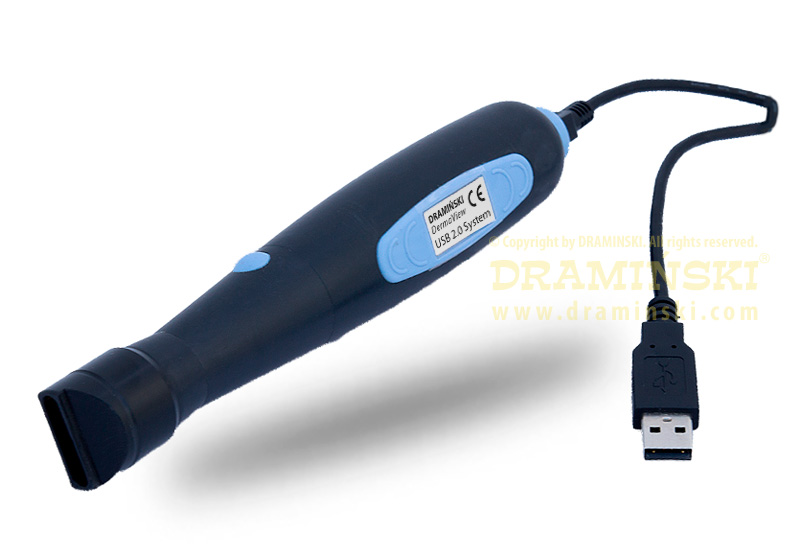
A representative product in this category is the DRAMINSKIDermaView, a device developed for detailed skin assessment. Based on the available product information, it is designed to support accurate imaging of the epidermis and dermis, helping users evaluate skin condition with more confidence than surface observation alone.
The device uses a 48 MHz probe, which is intended for very precise skin imaging. It also supports practical examination tasks such as echogenicity measurement, length measurement, and surface area assessment, including contours. In clinical and cosmetic applications, these functions can be helpful when documenting visible and sub-surface changes over time.
Another useful aspect is patient record management. The ability to save and review examination images can support before-and-after comparison across multiple sessions, which is often essential in treatment monitoring, consultation, and progress documentation.
What to consider when choosing dermatology equipment
Selection usually starts with the intended clinical use. Some users need a device mainly for skin condition screening and documentation in aesthetic practice, while others may require more detailed imaging support for dermatological evaluation. The right choice depends on how often the equipment will be used, what type of information needs to be recorded, and how results will be reviewed later.
It is also worth checking workflow-related factors such as portability, data storage, software support, and connectivity. A compact device that can connect easily to a computer may fit well in practices that need flexible room-to-room use or straightforward integration into existing documentation processes.
Measurement capability is another key point. Depending on the application, users may look for tools that allow dimensional assessment, image archiving, or comparative monitoring across treatment stages. In categories where objective evidence is important, these functions often matter more than broad feature lists.
Typical application areas
Dermatology equipment in this category can be relevant for dermatology clinics, aesthetic medicine centers, cosmetology practices, and treatment providers who need structured skin analysis. Common use cases include baseline skin evaluation, treatment planning, monitoring of therapy response, and comparison of pre- and post-procedure findings.
Devices with image storage and measurement functions are especially useful in practices where progress needs to be shown clearly to both clinicians and patients. This can support more informed discussions around treatment effects, expected timelines, and when adjustments may be needed.
For facilities that also manage broader patient monitoring needs, related categories such as blood pressure monitors and medical thermometers may complement a wider medical measurement setup.
Key practical benefits in daily use
In real-world operation, usability matters almost as much as measurement quality. Lightweight construction, ergonomic handling, and simple connection to a computer can make a meaningful difference during repeated examinations. When a device is easier to operate, it is more likely to be integrated consistently into routine assessment rather than used only occasionally.
Data handling is equally important. Systems that allow image capture, retrieval, and note management can improve continuity of care and reduce reliance on fragmented records. In environments where follow-up visits are common, organized digital records support faster review and more reliable comparison.
The DRAMINSKI DermaView illustrates this practical approach with features such as USB connectivity, compact form factor, and support for storing examination data. These characteristics make it relevant not only from a diagnostic perspective but also from a workflow standpoint.
How this category fits into a broader medical measurement environment
Although dermatology-focused devices serve a specialized purpose, they are part of the wider ecosystem of medical measuring equipment. Practices often combine skin assessment tools with other measurement and monitoring devices depending on the services they provide, patient profile, and documentation requirements.
For example, clinics involved in wellness, preventive care, or cosmetic consultation may also work with tools such as weight management and body fat scales. The shared goal across these categories is not simply measurement itself, but better-informed clinical decisions supported by objective data.
Choosing equipment with the right level of detail
Not every practice needs the same imaging depth or measurement workflow. The most suitable option is usually the one that matches the level of detail required in consultation, diagnosis support, and treatment monitoring. For some users, portability and ease of use will be the main priority; for others, image precision and longitudinal tracking will carry more weight.
This category is most valuable when viewed as a toolset for objective skin evaluation. Rather than relying only on visual impressions, providers can use specialized equipment to document findings more consistently, compare outcomes over time, and support a more evidence-based approach to skin-related care.
If your work involves dermatological or aesthetic assessment, choosing equipment that balances imaging quality, measurement functionality, and practical usability can make daily evaluation more structured and more informative.
-
-
-
-
-
-
-
-
-
-
-
-
-
-
-
-
-
-
-
-
-
-
-
-