


Industrial machinery
Production teams, maintenance departments, and workshop buyers often need more than a single machine type. They need a practical view of the wider equipment landscape, from cutting and shaping to finishing, coating, and material processing. This Industrial machinery category brings together a broad range of machines used in manufacturing, fabrication, assembly, and industrial maintenance environments.
Across this category, you can explore equipment for metalworking, woodworking, electronics production, and process support tasks. The range includes both standalone workshop machines and specialized systems used in higher-precision industrial lines, making it easier to compare options based on application, workpiece, throughput, and installation needs.
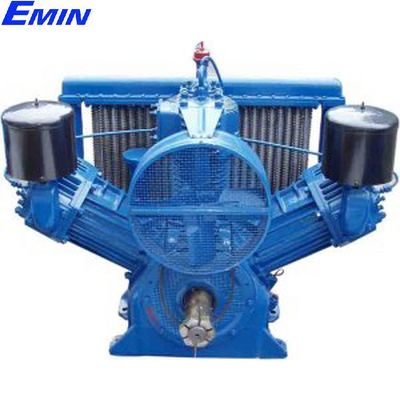
Built for diverse industrial applications
Industrial machinery covers a wide operating spectrum. In one environment, the priority may be rough cutting, edge preparation, or stock removal; in another, it may be repeatable finishing, PCB coating, or controlled processing of formed parts. That is why selection should start with the actual production task rather than with brand or power rating alone.
Within this category, buyers may encounter machines used for sawing, planing, drilling support, chamfering, and conformal coating. For example, workshop-oriented equipment such as the BOSCH GTS 10 XC Table Saw and MAKITA 2704N Table Saw serves material cutting needs, while systems like the Nordson Select Coat SL-940 and SL-1040 are designed for precise coating processes in electronics manufacturing.
Typical machinery groups found in this category
Although the page spans many machine families, most products can be understood through their role in the production workflow. Some machines remove material, some shape edges or surfaces, and others support assembly, protection, or downstream finishing.
- Cutting and sawing equipment for sheet, bar, wood panels, and general fabrication tasks.
- Chamfering and edge-preparation machines for cleaner weld prep, deburring, and safer component handling.
- Surface and dimension-processing equipment for improving flatness, thickness consistency, or finish quality.
- Specialized process systems for applications such as selective conformal coating in electronics production.
- Supporting tooling and accessories including drill chucks, drill bits, and chargers that help maintain machine usability and workflow continuity.
This mix is especially useful for B2B buyers who need to source both core equipment and compatible accessories in one place rather than searching across unrelated catalogs.
Examples from leading industrial brands
Several recognized manufacturers appear across the category, each relevant to different production needs. BOSCH is represented by workshop and accessory products such as the GTS 10 XC Table Saw, GCM 254 Mitre Saw, SDS Plus drill chuck, and HSS-G drill bits. These products are relevant where cutting, drilling support, and general fabrication productivity are important.
MAKITA adds equipment commonly associated with workshop material preparation, including the 2704N Table Saw and 2012NB Power Planer. For users processing timber or board materials, these machines fit applications where stable cutting geometry and repeatable feed performance matter.
For more specialized industrial automation and electronics manufacturing, Nordson contributes selective coating systems such as the Select Coat SL-940 and SL-1040. These are not general workshop tools; they belong in controlled production environments where coating accuracy, motion repeatability, and process consistency are key. AGP also appears with dedicated chamfering machines such as the EB24 and EB24R for steel plate and pipe edge preparation.
How to evaluate the right machine for your process
A useful way to compare industrial machinery is to begin with the material and required output. Wood, steel plate, pipe, and PCB assemblies all demand different machine structures, feed methods, and precision levels. A saw selected for a fabrication bench will be evaluated differently from a conformal coating system intended for inline electronics manufacturing.
Next, consider the working envelope, cutting or travel capacity, and the consistency required across repeated jobs. In practical terms, this means looking at table size, blade diameter, chamfer range, motion travel, or repeatability depending on the machine type. A table saw and a coating system may both be industrial machines, but the buying logic is completely different because one is judged primarily by cutting capacity and the other by motion control and process precision.
It is also important to review installation constraints such as power supply, footprint, weight, and available operator space. For larger production equipment, these factors affect not only procurement but also commissioning, safety planning, maintenance access, and future line expansion.
Why accessories and support components still matter
Industrial performance depends not only on the base machine but also on the tooling and consumable ecosystem around it. A drill chuck such as the BOSCH 2608572213 with SDS Plus interface, or HSS-G drill bits in 2.5 mm and 6 mm sizes, may appear minor compared with a saw or process machine, but these components directly affect compatibility, uptime, and hole quality during day-to-day work.
The same applies to support items like the BOSCH GLA 1880 GV Charger 220V for H-45L-1. In many industrial settings, overlooked accessories become the cause of unnecessary downtime. For procurement teams, it is often more efficient to plan for the full operating setup from the start rather than treating accessories as an afterthought.
Application-focused selection is more useful than broad comparison
Because this category includes a wide mix of machinery, the best approach is to match product type to process stage. For instance, edge preparation for fabricated parts may point toward a dedicated chamfering solution such as the AGP EB24 Steel Plate Chamfering Machine or EB24R Pipe Chamfering Machine, while woodworking operations may fit a mitre saw, table saw, or planer depending on the cut geometry and finish target.
In electronics assembly, the conversation shifts from cutting to controlled dispensing and coating. Systems like the Nordson Select Coat series are selected based on board size range, conveyor integration, applicator method, and repeatability. That makes this category relevant not only to machine shops, but also to factories with specialized process requirements and mixed equipment purchasing needs.
Choosing by production environment
Small workshops and maintenance areas often prioritize flexibility, operator familiarity, and compact installation. In those settings, portable or bench-oriented machines from brands such as BOSCH or MAKITA may be more practical than larger dedicated systems. They support repair, fabrication, light production, and on-site preparation work without the complexity of a full automated line.
Larger factories usually place more emphasis on repeatability, throughput, safety integration, and process standardization. That is where more specialized machinery becomes important, especially when the machine must work as part of a broader manufacturing cell or inline process. Buyers in these environments typically evaluate not just machine function, but also support for process stability and maintenance planning.
Finding the right fit within the industrial machinery range
This category is designed to support practical sourcing decisions across a wide industrial scope. Whether the need is a workshop cutting machine, a planing solution, a chamfering machine for weld preparation, or a selective coating system for electronics production, the key is to compare each option against the real operating task, material type, and expected duty cycle.
By focusing on application requirements, available space, and the supporting accessory ecosystem, buyers can narrow the selection more effectively and avoid mismatched equipment. Explore the available industrial machinery range to identify the machine type and brand lineup that best fits your production, maintenance, or process engineering needs.
Types of Industrial machinery (12,383)
- Automatic Spray Cabinet (15)
- Boring Machine (30)
- Centerless grinding machine (43)
- Chamfering Machine (38)
- Compressed Air Treatment Equipment (1,061)
- Cutting - Bending industry machine (169)
- Drill press bench (150)
- Drill Sharpener (6)
- Drilling Machine (165)
- Dryer (17)
- EDM CNC Machine, electrical discharge machining (74)
- Food machinery (49)
- Heat shrinking machine (14)
- Heat Staking Machine (31)
- High Frequency Welding Machine (34)
- Hot Air Seam Sealing Machine (12)
- Hot Air Welding Machine (21)
- Hot Plate Welding Machine (25)
- Hydraulic stamping machine (18)
- Hygiene Products Testing Equipment (7)
- Induction Heating (21)
- Industrial Heaters (5,630)
- Industrial Water Cooler/ Chiller (100)
- Infrared dryer (7)
- Knifes Grinder (5)
- Lathe Machine (177)
- Marking machine (65)
- Milling Machine (262)
- Mineral Sampling System (6)
- Mixer, grinder, mill (42)
- Pad Printing Machine (51)
- Paper processing machinery (161)
- Piper screw cutting machiner (48)
- Power Press (184)
- Pump (246)
- Sample Cutting Machine (321)
- Saw Blade Grinders (15)
- Saw blade Machine (115)
- Screen Printing Machine (79)
- Shaping Machine (6)
- Shear Machine (144)
- Slip Roll (101)
- Slotting Machine (10)
- Sorting and Packing line (792)
- Spin Welding Machine (7)
- Stockpile-inventorying Equipment (4)
- Surface Grinder (238)
- Textile industry auxiliary equipment (86)
- Transformer winding machine, electrical wire (69)
- Ultrasonic Welding Machine (80)
- UV Curing Machine (9)
- Vacuum Forming Machine (3)
- Welding machines (728)
- Winding machine (176)
- Wire & cable processing machine (416)
-
-
-
-
-
-
-
-
-
-
-
-
-
-
-
-
-
-
-
-
-
-
-
-