


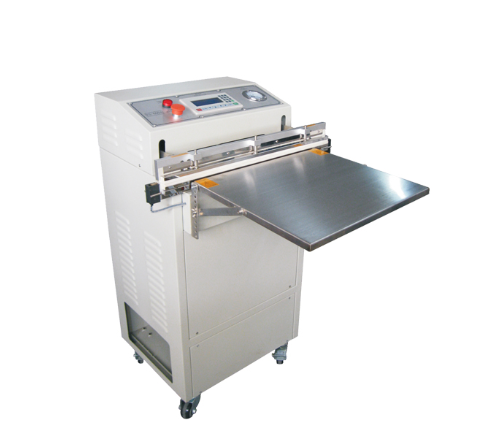
Vacuum packager
When product protection, shelf-life control, and pack appearance matter at the same time, choosing the right packaging equipment becomes a practical production decision rather than a simple machine purchase. This is where vacuum packager systems are widely used across food processing, industrial components, electronics, medical supplies, and many other B2B packing environments.
On this page, you can explore vacuum packaging machines designed for consistent sealing, controlled air removal, and, in some models, gas flushing for more demanding packaging processes. The range includes compact tabletop solutions, larger seal-length configurations, and replacement parts that support long-term equipment operation.
Why vacuum packaging is used in industrial packing lines
A vacuum packaging process removes air from the package before sealing, helping reduce oxidation, moisture-related issues, contamination risks, and volume inside the pack. In many applications, this improves product stability during storage and transport while also creating a cleaner and more consistent final package.
For production teams, the real value often comes from process repeatability. A properly selected machine helps maintain uniform seal quality, stable vacuum performance, and predictable cycle timing. In a broader packing workflow, vacuum packaging may be used alongside equipment such as a carton sealer once primary packaging is completed.
Typical equipment scope in this category
This category covers vacuum packagers intended for bag sealing and vacuum creation, with some models also supporting gas injection or gas flushing. That makes them suitable for operations that need more than basic sealing, especially where pack integrity and internal atmosphere are important to product quality.
You will also find related spare parts and machine components here. Items such as heating wires and control box assemblies play an important role in maintenance planning, because sealing performance depends not only on the machine frame and pump system but also on the condition of wear parts and control hardware.
Representative machines from Metronelec and Airzero
Metronelec is represented here with several nozzle-type vacuum packing machines that cover different seal lengths and operating capacities. Examples include the MSV 450, MSV 600, and MSV 800 series, as well as MSV450 M VA, MSV450 M VG, MSV600 M VA, and MSV600 M VG variants. These models illustrate how buyers can choose between more compact configurations and larger sealing formats depending on bag size, throughput, and whether gas injection is required.
Airzero adds another practical layer to the category with machines such as the AZ-600ES-D and AZ-800E-D, along with spare parts like the AZ-600ES wire, HT heat wire for AZ-450E-D, and the AZ-450-E control box. This is useful for companies that are not only sourcing a new machine, but also managing equipment lifecycle support and replacement parts for installed systems.
How to choose the right vacuum packager
The first selection point is usually the package format. Seal length should match the bag width and the product dimensions, while seal width and sealing method influence pack strength and consistency. For example, different machines in this category range from smaller 450 mm sealing formats up to longer 800 mm configurations, which can significantly affect suitability for larger products or wider bags.
The second point is vacuum generation and utility requirements. Buyers should review pump capacity, target vacuum level, compressed air availability, and electrical supply before making a decision. In production settings where packaging speed matters, these factors influence cycle time and daily output just as much as the nominal machine size.
A third consideration is whether the process needs vacuum only or vacuum plus gas flushing. Some products benefit from modified internal pack conditions, especially where deformation, oxidation, or product surface protection are concerns. If the packing line also requires secondary identification after sealing, a labeling machine may be part of the next process step.
Vacuum only or vacuum with gas flush?
Not every application needs the same packaging atmosphere. A vacuum-only machine is often sufficient where the main goal is air removal and secure sealing. This is a common choice for straightforward industrial packing tasks where product preservation is improved primarily by reducing internal air volume.
Machines with gas injection or gas flushing add process flexibility. In this category, some Metronelec VG models and Airzero equipment indicate this type of capability. These configurations are relevant when the product requires cushioning, atmosphere control, or additional protection after vacuum creation, provided the packaging material and production process are matched correctly.
The importance of spare parts and maintenance planning
For vacuum packaging equipment, maintenance should be considered from the start. Heating wires, sealing consumables, and control-related components directly affect seal quality, uptime, and process stability. A machine can still be mechanically sound, but if the sealing wire is worn or the control unit becomes unreliable, packaging quality may quickly deteriorate.
That is why it is useful to see spare parts listed within the same category context. Products such as the Airzero AZ-600ES-Wire, the HT Heat Wire for AZ-450E-D, and the AZ-450-E control box show that ongoing serviceability is part of the purchasing decision. For many B2B users, this reduces downtime risk and simplifies maintenance sourcing.
Where vacuum packagers fit in a complete packaging workflow
A vacuum packager is often only one station in a broader production line. After the product is packed and sealed, businesses may move to labeling, grouping, cartoning, or case handling depending on shipment requirements. That makes machine compatibility, operator workflow, and line layout important topics during selection.
In facilities building a more complete end-of-line setup, vacuum packaging may be integrated with equipment such as a blister packing machine for other product groups, or upstream/downstream systems like an auto case erector for shipping preparation. The right choice depends on product type, pack format, and the level of automation required.
What buyers typically compare before ordering
Most industrial buyers compare a similar set of factors: seal dimensions, vacuum performance, machine footprint, utility requirements, material compatibility, and maintenance needs. For some operations, stainless steel construction, digital controls, timer-based adjustment, or vacuum sensor control may also be relevant depending on the application and operating environment.
It is also important to compare whether the machine is intended for occasional batch use, regular daily production, or more demanding continuous packaging work. Looking beyond headline specifications helps ensure the selected equipment matches actual production conditions, operator skill level, and service expectations.
Find a vacuum packaging solution that matches your process
This category brings together vacuum packaging machines and key related parts from manufacturers such as Metronelec and Airzero, covering both equipment selection and maintenance support. Whether you need a compact sealing format, a longer sealing bar, gas flushing capability, or replacement consumables for an existing system, the available range supports several common industrial packaging needs.
A good vacuum packager should fit the product, the bag format, the production rhythm, and the maintenance strategy of your operation. Reviewing the machine role in the full packaging workflow will help you choose a solution that is practical not only on paper, but also on the factory floor.
-
-
-
-
-
-
-
-
-
-
-
-
-
-
-
-
-
-
-
-
-
-
-
-