


Honey color portable photometer
Color consistency is a practical quality parameter in honey processing, packaging, and trade. When visual inspection is not precise enough, a honey color portable photometer helps quantify color in a repeatable way, making it easier to compare batches, support grading workflows, and document results during incoming inspection or final product control.
On this page, you can explore portable instruments used for honey color evaluation alongside related handheld and digital tools that support honey analysis. For laboratories, food processors, and quality teams that need faster decisions without moving samples to a larger benchtop setup, these compact devices offer a more convenient testing approach.
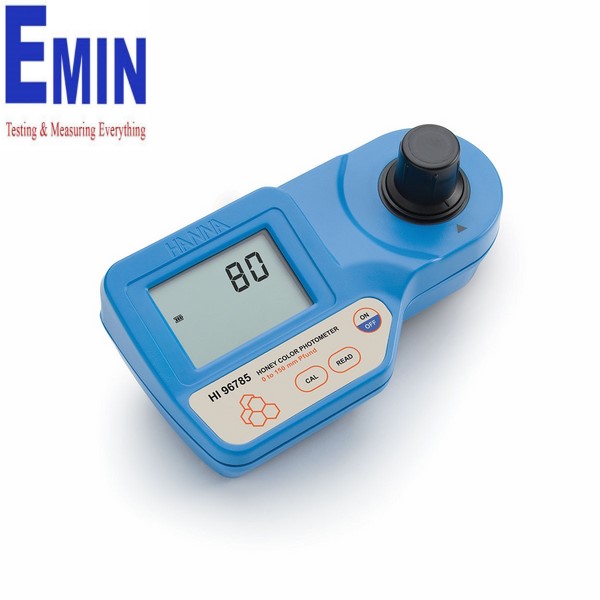
Portable measurement for honey grading and quality control
In honey applications, color is often used as part of product classification, consistency control, and customer specification checks. A portable photometer is designed to reduce subjectivity by using an optical method rather than relying only on visual comparison under changing light conditions.
The Hanna HI96785 Honey Color Portable Photometer is a clear example of this type of instrument, built for direct honey color measurement in mm Pfund. For users who need a field-ready or mobile solution, this format is useful in production areas, receiving stations, and routine QA environments where quick verification matters.
How honey color portable photometers fit into the testing workflow
A portable photometer typically becomes one step in a broader honey evaluation process. Teams may check color for grading, then review moisture, Brix, or related concentration values to better understand product condition and process stability.
That is why this category also sits naturally alongside refractometer-based tools. In practical use, color and composition are often reviewed together, especially when producers want to monitor both appearance and storage-related quality indicators rather than assess one parameter in isolation.
Related instruments commonly used with honey samples
Although the main focus here is color measurement, several related instruments can support honey testing depending on the parameter being evaluated. For moisture determination based on refractive index, the ATAGO HHR-2N Honey Refractometer is intended for measuring water content in honey, while handheld models such as Holani H-122 and Holani H-125 are aimed at honey moisture checks in portable form.
For users who prefer digital readout and multi-scale capability, examples in this ecosystem include the Holani D-301, Holani MDR-301, and specialized models such as Holani CS90-302 for honey water measurement. These instruments are not substitutes for a honey color photometer, but they are relevant when a quality process includes moisture control, Brix review, or refractive index verification in addition to color grading.
What to consider when choosing a honey color portable photometer
The right instrument depends on how your team uses the result. If the goal is routine batch classification, focus on the measurement scale used by your workflow, expected repeatability, and whether the device is practical for frequent daily checks. Portable operation, battery power, and simple sample handling can make a noticeable difference in busy production settings.
It is also worth considering the surrounding testing environment. Some users need only a dedicated color meter, while others want compatibility with a broader quality program involving handheld optical instruments from brands such as HANNA or Holani. When comparing options, think beyond the single reading and evaluate how easily the instrument can fit into your SOP, operator training, and documentation routine.
Photometer versus refractometer for honey testing
A common source of confusion is whether a refractometer can replace a portable photometer. In practice, these tools answer different questions. A photometer is used when the objective is to measure color through optical detection, while a refractometer is generally used to estimate properties such as moisture, Brix, Baume, or refractive index.
For example, Holani H-123 and H-124 handheld honey refractometers are oriented toward Brix and water-related measurement, not honey color grading in the same sense as a dedicated photometer. If your specification includes both visual quality and composition control, the two instrument types can complement each other rather than compete.
Typical users and application scenarios
Honey color portable photometers are relevant for food producers, honey packers, agricultural product processors, quality inspection teams, and trading companies that need a more standardized grading method. They are especially useful when multiple operators must assess samples consistently across shifts or sites.
These instruments can also support incoming raw material checks, lot release decisions, complaint investigation, and product comparison during blending or formulation work. In many cases, the value of the instrument comes not only from a single reading but from creating a more repeatable quality control process over time.
Broader liquid testing context
This category belongs to a wider liquid testing environment where different sample types require different methods. If your work also involves simple indicator-based screening, you may also review test paper for fast routine checks. For applications that depend on consumables in wet chemistry workflows, other reagents can also be relevant depending on the procedure.
Even though those tools serve different purposes than honey color analysis, they show how portable measurement often sits within a larger inspection and laboratory support system. Selecting the right device is easier when the target parameter, sample matrix, and required level of accuracy are clearly defined from the start.
Choosing with confidence
When reviewing this category, it helps to begin with the actual decision you need the instrument to support: grading, batch comparison, moisture-related quality checks, or a combination of these tasks. A dedicated honey color portable photometer is the right direction when standardized color evaluation is the priority, while refractometer-based tools are better suited to concentration and moisture assessment.
By comparing intended use, measurement method, and workflow requirements, buyers can narrow the shortlist more effectively and avoid choosing an instrument that measures the wrong parameter. For teams working with honey as a commercial or quality-sensitive product, a well-matched portable device can make routine testing faster, clearer, and easier to standardize.
-
-
-
-
-
-
-
-
-
-
-
-
-
-
-
-
-
-
-
-
-
-
-
-